
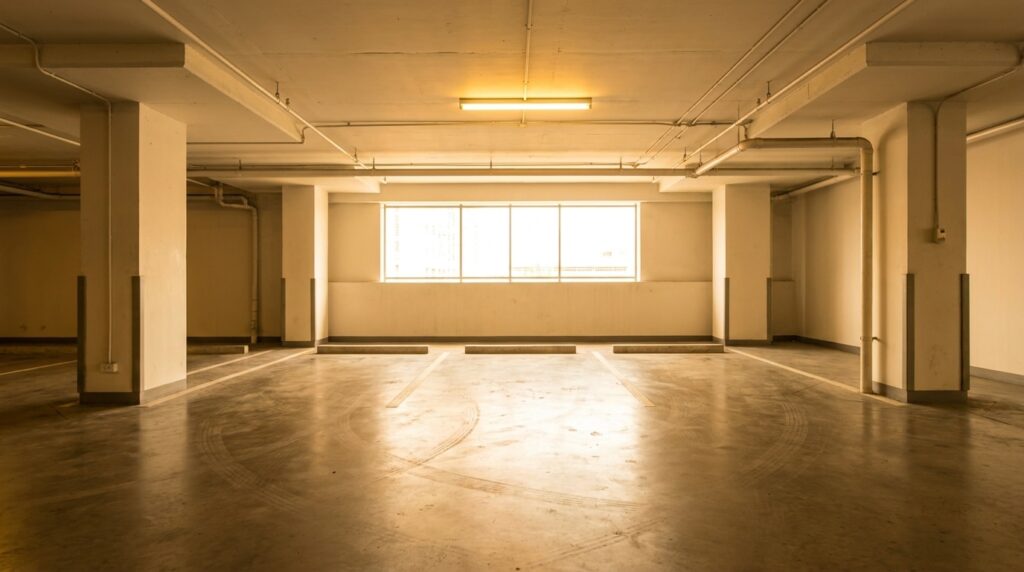
As summer unfolds and traditional savings accounts struggle to keep pace with rising living costs and persistent inflation, many individuals are on the lookout for new ways to grow their finances. Investing in a parking space has emerged as an appealing option in the realm of accessible real estate investment. While this idea may seem attractive and the initial investment typically manageable for building a first capital, the simplicity of acquiring a few square feet belies a serious financial pitfall that most buyers unfortunately discover too late, after the initial excitement of the notary’s act has faded.
Don’t miss out on our latest publications:

Why asphalt is more appealing than your bank’s savings account
In today’s unpredictable economy, the limitations of regulated savings are becoming increasingly clear to investors. Money sitting idly in a traditional account quietly loses purchasing power due to widespread price increases. This reality drives savers to seek out solid alternatives, logically turning towards more tangible and concrete assets. Real estate, a historically reliable safe haven, offers the material reassurance that a risk-averse public craves amid volatile financial markets. The acquisition of a simple parking space fits this quest for tangibility, providing a visible and easily understandable asset without requiring overly complex procedures.
The phenomenal success of parking spaces is largely attributed to their remarkably accessible entry point. Unlike renting an apartment or studio, investing in urban parking infrastructure has become commonplace without the need for long-term debt commitments spanning twenty or thirty years. This financial accessibility creates a thrilling sense of security and ease, attracting novices eager to diversify their portfolios. For many, managing this raw space seems straightforward, cleverly perpetuating the myth of a passive income stream delivered monthly with little effort in maintenance or rental management.
The excitement of initial rents often obscures a less rosy reality
The first formidable trap when exploring real estate lies in the spectacularly inflated gross yields prominently displayed in listings. This deliberately exaggerated figure flatters the investor’s ego at the moment of commitment, promising returns far superior to those of traditional banking savings. However, since 2023, the dynamics have shifted in most major metropolitan areas. The rapid rise of alternative urban mobility, such as cycling and the intensive development of public transport, has led to stagnation or even a decline in demand for permanent car parking. This inexorably results in higher vacancy rates, leaving spaces empty for extended periods.
Disillusionment strikes sharply when faced with the silent yet weighty burden of associated costs tied to such an acquisition. Common expenses like homeowners’ association fees, ongoing maintenance of motorized infrastructures, essential insurance, and potential management fees significantly eat into the expected rental income. Moreover, the tax advantages typically reserved for residential real estate largely exclude parking from most tax relief programs. When accounting for these various financial leaks, the touted yield rates actually drop to modest levels between 2% and 4%, a stark contrast to the enticing promises found in advertising.
The only mathematical formula to ensure your investment truly pays off
The sole numerical truth capable of preventing the shipwreck of such a project relies on rigorous analysis focused exclusively on net yield. There exists one protective equation against commercial illusion: Net yield = annual net rent ÷ total purchase price, including fees and property taxes. It is the precise application of this calculation that enables identification of genuine opportunities and distinguishes them from the financial abyss often hidden behind a glossy urban listing.
The critical importance of this equation lies in the many economic factors it compels one to consider. One must always include notary fees in the total acquisition price, as these can disproportionately impact the sale price of lower-value assets. Additionally, deducting ongoing expenses, potential structural repairs, and, crucially, property taxes from the annual rent is essential to accurately reflect the true profit margin generated by the asset. Neglecting any of these parameters condemns the investment to a misleading estimate that will become painfully evident in the subsequent years.
Assess hidden costs to truly relish your returns
It is all too common to be overly optimistic when making a purchase offer in real estate, particularly in the case of seemingly easy-to-manage small investments. Relying consistently on the indicators provided by this secret formula allows you to construct a robust shield around your personal capital. Accurately listing every expense, coldly evaluating the direct market, and anticipating regulations limiting the need for parking spaces in new buildings ensures a thoughtful and pragmatic approach that leaves no room for chance.
Before committing the funds painstakingly saved from stagnant savings accounts, a clear-eyed examination of the project is essential. Experts in this volatile sector now recommend intelligently combining small residential real estate investments and using parking spaces merely as supplementary assets, provided these properties are located in highly dense areas. By exercising this diligence when reviewing emerging real estate offers today, secure assets will yield genuine long-term value.
Ultimately, choosing the asphalt of a parking garage over the low yield of a savings account demands a far more analytical approach than a mere surface transaction. Once the full scope of unavoidable expenses and the rising vacancy rates is illuminated, calculating net yield proves to be a formidable tool for avoiding financial setbacks. Would it not also be wise to cast a discerning eye on the realm of paper assets, such as REITs, which sometimes offer liquidity and stability absent in urban parking investments?