
Do you enjoy our content?
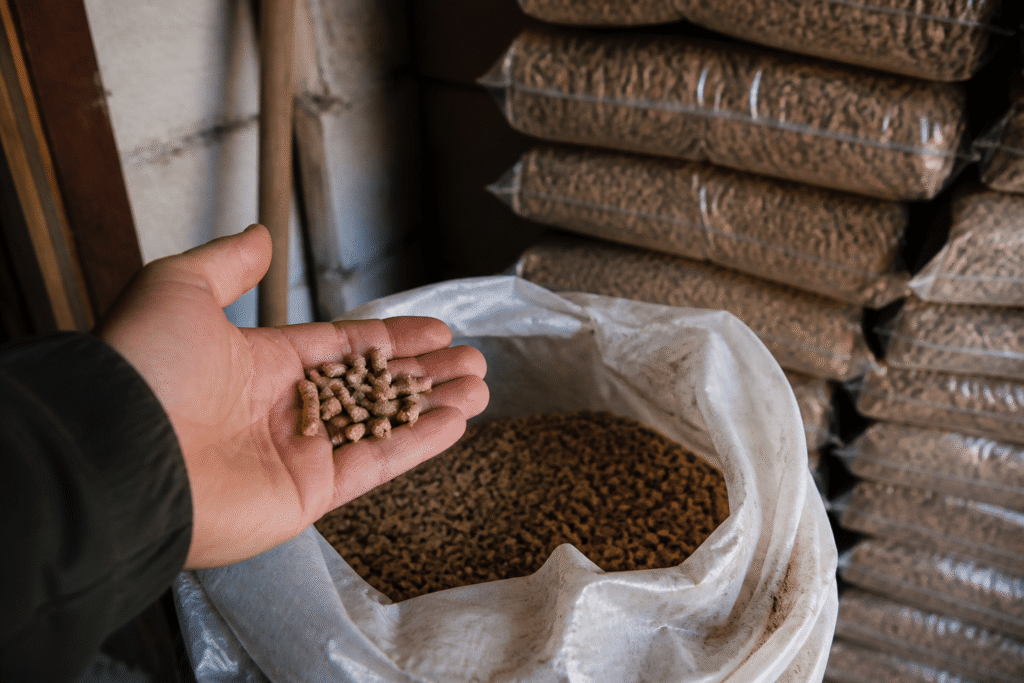
As the first chills of October set in, many households relying on pellet stoves prepare for winter by stocking up on pellets. A common belief is that storing bags in the garage, greenhouse, or basement will protect them from the elements. However, these locations can actually be among the worst choices, significantly diminishing the heating efficiency of the pellets. This article explores why improper storage can transform high-quality fuel into nearly unusable pellets and how to avoid this common mistake.
- Avoid storing pellets in basements, uninsulated garages, greenhouses, and garden sheds, as humidity can reduce their calorific value by up to 10%.
- Ideal storage should be dry, ventilated, dark, and maintained between 10 and 20 degrees Celsius, similar to a well-tempered pantry.
- To properly preserve pellets, elevate them on a pallet, keep them away from walls, and seal the bags until use.
- Why humidity is the number one enemy of pellets
- Storage locations to avoid at all costs
- Criteria for an ideal storage space
- Properly conditioning your pellets on a daily basis
Why humidity is the number one enemy of pellets
Pellets are made from compressed sawdust without any added chemical binders. This natural composition makes them particularly vulnerable to ambient humidity. Even in pellet form, wood remains hygroscopic, meaning it absorbs moisture from the surrounding air, much like a sponge soaks up water when placed on a wet surface.
This phenomenon directly impacts the energy efficiency of the fuel. A bag of pellets stored in a damp basement can absorb up to ten percent additional moisture, significantly reducing its calorific power. This translates to the stove requiring more pellets to generate the same amount of heat, resulting in less efficient combustion, increased residues, and more soot buildup in the heating system.
Storage locations to avoid at all costs
The uninsulated garage tops the list of unsuitable storage spaces. Exposed to temperature fluctuations between day and night, it promotes condensation inside the bags, especially when they are placed directly on the concrete floor, which is naturally humid. Similarly, a garden greenhouse, even when sealed, experiences significant temperature swings and high humidity levels that can lead to condensation on pellet bags, much like fogging windows on a cool morning.
A garden shed, often made of wood or metal, may have issues with inadequate sealing and ventilation. As for the basement, typically regarded as cool and convenient for storage, it is often the worst possible place for pellets due to its naturally high humidity levels that exceed the tolerable limits for this type of fuel. In all these cases, pellets can become waterlogged, lose cohesion, or even disintegrate completely, making their use in a stove problematic, if not impossible.
Criteria for an ideal storage space
To fully preserve the energy qualities of pellets, the storage area must meet several specific requirements. Dryness is the primary criterion, closely followed by good ventilation to prevent any stagnation of humid air. Darkness also plays a significant role, as prolonged exposure to light can accelerate certain degradation processes of the wood surface.
Temperature stability is crucial, ideally maintained between ten and twenty degrees Celsius to avoid thermal shocks that encourage condensation. A dry, ventilated pantry, shielded from direct light, typically meets all these conditions and is one of the best locations within a home. If a pantry is unavailable, a well-insulated laundry room or a properly ventilated technical room can also suffice, provided there are no signs of moisture on the walls and floor.
Properly conditioning your pellets on a daily basis
Choosing the right storage location is not enough; the conditioning of the pellets is equally important for maintaining their quality. For households purchasing pellets in bulk, opting for a sealed pellet silo is the most reliable solution, as it effectively protects against moisture and climatic variations. For those using bags, it’s essential to keep them sealed until they are needed, avoiding premature exposure to ambient air.
Additionally, organizing the storage requires some simple precautions. Elevating the bags off the ground using a wooden pallet helps reduce moisture ingress, a particularly useful measure in spaces where the floor remains slightly cool even during dry periods. It is also advisable to slightly space the bags away from the walls to encourage minimal air circulation and to avoid direct contact with surfaces that might sweat due to temperature differences.
Appropriate, dry, and ventilated storage remains the key to preserving the calorific power of pellets and optimizing heating efficiency throughout the cold season. By steering clear of the pitfalls of uninsulated garages, greenhouses, or damp basements, and prioritizing a well-tempered pantry with careful conditioning, every household equipped with a pellet stove can make the most of their fuel, winter after winter.






