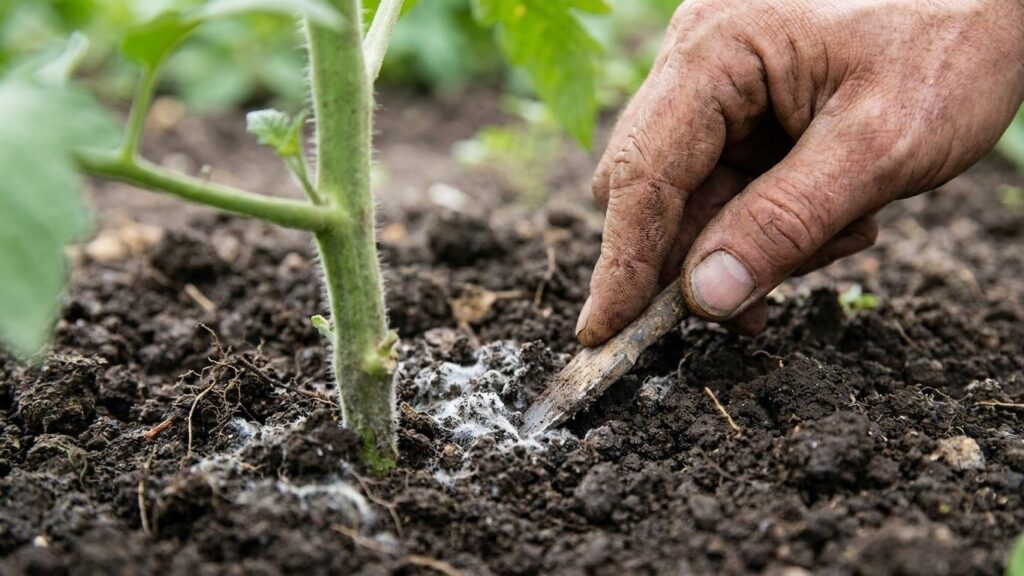
The scene unfolds in June at the vegetable garden. My neighbor Bernard, a 68-year-old retiree with a vegetable patch that makes the entire neighborhood envious, suddenly stopped as he passed by my tomatoes. He set down his watering can, scraped a finger across the fine, white crust that had formed around the base of a Roma tomato, and looked at me with that patient expression reserved for well-meaning beginners: “That’s not compost you’ve put there. That’s compost that’s going bad.”
Fresh peels placed directly at the base of the tomatoes. It’s one of the most common practices among amateur gardeners, intuitive, even. We produce organic waste; plants consume organic matter, so we shortcut the system. It seems like flawless logic. Yet, this shortcut does more harm than good.
Key Takeaways
- Uncontrolled fermentation of fresh peels attracts slugs, mold, and pathogens directly to your plants.
- Certain pathogenic fungi can survive conventional cold composting and persist for years in the soil.
- Compost is truly usable only after 6 to 12 months of maturation at sufficient temperatures, not before.
What Really Happens Under Your Fresh Peels
Peels left exposed on the soil do not decompose properly; they ferment. This distinction is crucial. Uncontrolled fermentation, in a damp environment and in direct contact with stems and roots, creates optimal conditions for pests and pathogens. Slugs find a warm buffet in the shade, while mold thrives on incompletely decomposed organic matter, sometimes introducing undesirable spores into the soil.
The situation worsens with potato peels, a member of the same nightshade family as tomatoes. Their high starch content attracts mold and sometimes pathogenic fungi, which can persist even if the compost heap heats up moderately. Yet the danger doesn’t end with visible mold. Potato tubers, particularly those from conventional farming or showing signs of disease, can carry spores of pathogenic fungi or oomycetes. Two well-known threats are late blight and verticillium wilt. These diseases can survive in peels, and if the composting process doesn’t reach sufficient temperatures, the spores remain intact.
Verticillium wilt deserves special attention. This fungus blocks the vascular system of plants, with microsclerotia that can remain active in the soil for years. It affects not only potatoes but also tomatoes and eggplants. Once introduced into your garden’s soil through contaminated compost, these pathogens can persist for several years, making it exceptionally challenging to grow certain plants.
What about chemical treatments? Store-bought potatoes are often treated with sprouting inhibitors and pesticides. Even after washing, traces can remain and find their way into your compost, and then into your soil. For instance, clopyralid, a common herbicide, resists degradation and affects nightshades like tomatoes and eggplants, as well as legumes. You might be watering your tomato plants with the very enemy of your crops.
Why Traditional Composting Isn’t Enough (If Done Incorrectly)
Even those who use a compost bin sometimes make a similar mistake: tossing in fresh peels and then using the compost too early. Most home composters operate under “cold composting,” where the temperature rarely exceeds 40-50°C. However, to effectively destroy pathogens like late blight or verticillium wilt, a sustained temperature above 55°C is necessary. Without this sanitizing heat, compost becomes an incubator and a formidable vehicle for diseases.
The timing is equally critical. To achieve mature compost, ready to be mixed into the soil, one must allow a period of 6 to 12 months. This is not an arbitrary convention. To determine if your compost is mature, look for these signs: a dark brown color with a crumbly texture, a sweet and pleasant earthy smell, and stable temperatures indicating that the decomposition process has finished.
After about three months, one can harvest “young compost,” but only for limited use. This compost isn’t fully mature yet, but it can be used as mulch around trees or to prepare the soil before winter. For sensitive plants like tomatoes and eggplants, it’s best to wait until full maturity. Patience isn’t merely a desirable quality; it’s essential for effectiveness.
What to Do Instead
Bernard has been composting for thirty years using a two-bin system: the first receives fresh contributions, and the second contains compost in the maturation process. Nothing is used until it has passed through both stages. This pragmatic approach works wonders.
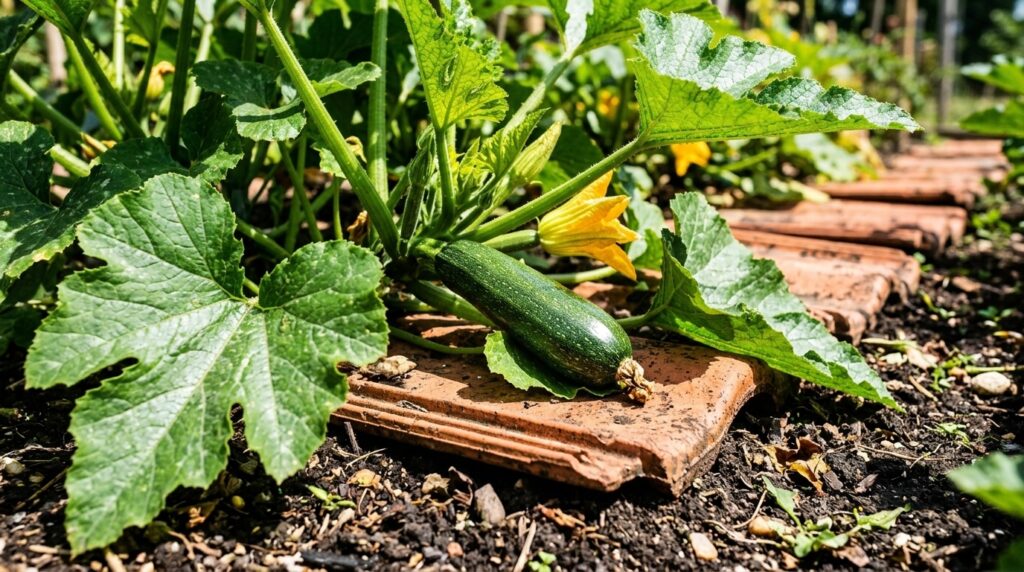
For common kitchen peels (carrots, zucchinis, salads), a well-managed compost bin remains the best option. Balance is the key principle: composting relies on alternating brown and green materials. Brown materials, like dead leaves, small branches, cardboard, and straw, provide the necessary carbon structure for the heap. Green materials, like grass clippings, kitchen scraps, and peels, supply the nitrogen that kickstarts fermentation.
For potato peels specifically, a simple alternative exists: direct burial in a trench within the garden transforms peels into natural fertilizer straight in the soil without going through a compost bin. Choose a spot at the base of nutrient-hungry plants like squash, dig a hole about 6-8 inches deep, place the cut peels inside, and cover them entirely with soil to deter pests. The key is to never place them near tomatoes or potatoes to avoid cross-contamination.
Speeding up compost maturation is also possible. To compost more quickly, turn the material roughly once a month and only add fine, pre-cut or shredded materials. A tumbling composter reduces the timeframe: both tumbling and worm composters can yield results in just 3 to 6 months.