Do you enjoy our content?
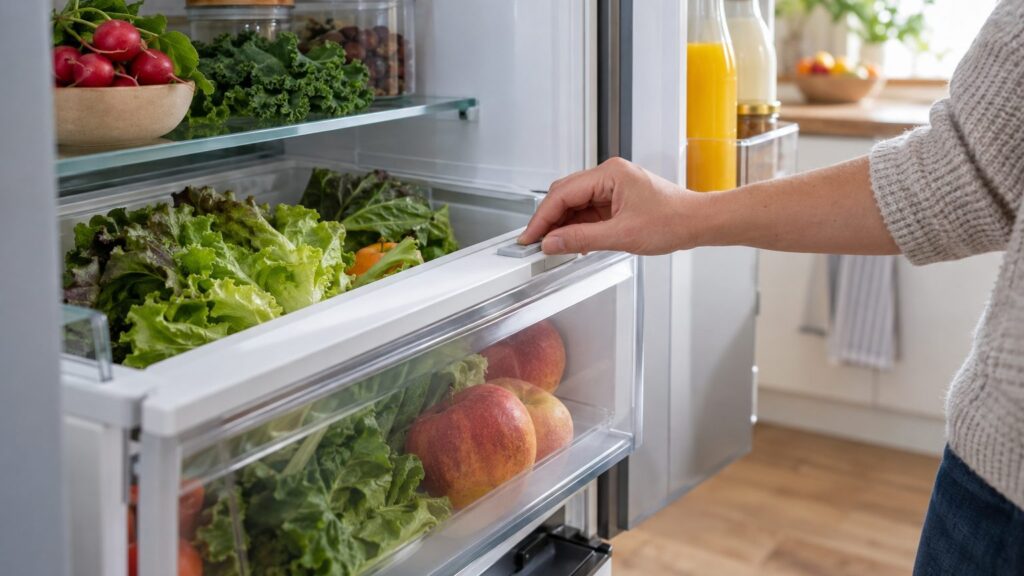
Contrary to popular belief, the small slider above the vegetable drawer does not regulate the temperature. Instead, it controls an air vent located in or near the drawer, primarily managing the humidity surrounding your food. When closed, it retains moisture for leafy vegetables, while opening it allows excess humidity to escape, benefiting fruits that spoil quickly, such as apples, pears, and grapes.
The slider does not affect the refrigerator’s temperature at all.
- The slider controls an air vent, not the refrigerator’s temperature.
- When closed, it maintains humidity for leafy vegetables like salads and herbs.
- When open, it releases excess humidity and some ethylene gas for fruits like apples and pears.
An air vent, not a thermostat
Many users mistakenly believe this slider is a temperature control, and the confusion is understandable: the lever is situated above the coldest drawer in the fridge, where one might expect to find a temperature adjustment. However, refrigerator repair technicians insist that this is not its function. Behind the slider lies a simple vent that opens or closes, creating a more humid environment within the vegetable drawer compared to the rest of the appliance.
On various models, pictograms illustrate the intended use: a vegetable icon on one side, a fruit icon on the other, sometimes labeled HIGH and LOW. For example, Samsung states on its website that humidity control features vary by model and options, so the manual for your appliance is the ultimate guide.
The mechanism operates in two positions. When the vent is closed, airflow is minimal and moisture remains trapped in the drawer. When open, air circulates, allowing some humidity to escape to the rest of the refrigerator, along with a portion of the ethylene gas produced naturally by some ripening fruits.
Closed: the humid cocoon for leafy vegetables
Finding a wilted salad two days after shopping or a limp bunch of parsley is a common frustration in many kitchens. Leafy greens release moisture, and in a closed drawer, this vapor becomes trapped. This creates a humid atmosphere that slows down drying out, which is ideal for salads, spinach, chard, leeks, and fresh herbs.
Carrots, once their greens are removed, also thrive in this environment. Root vegetables, in general, benefit from this humidity as if they were under a dome retaining their moisture.
A drawer left open will quickly dry out the greens.
Open: let apples, pears, and grapes breathe
For fruits, the logic reverses. Apples, pears, grapes, and kiwis prefer a more ventilated space. In a tightly sealed drawer, condensation can develop, causing fruits to soften or mold more quickly. Opening the vent allows excess humidity and some ethylene to escape.
Storing apples in a closed, humid drawer combines two degradation processes: excess moisture and ethylene, leading to fruits that become soft or even mealy before they are even cut open. Citrus fruits are also among those recommended to be stored in an open position according to preservation guides.
Ultimately, food waste often results from a setting that remains untouched, rather than from the quality of the groceries, a detail that can impact your wallet.
Common mistakes that ruin proper settings
Placing a washed, still-wet salad in a closed drawer alongside apples creates a combination of humidity and ethylene. Some guides warn that this can lead to blackened leaves within two days.
Plastic bags that become foggy present another issue: once condensation forms, it traps moisture around the products. It’s better to open the bags before storing. Additionally, avoid overcrowding the drawer to allow for adequate air circulation between vegetables.
The bottom of the drawer needs regular cleaning.
The worst reflex is to leave the slider untouched. In a rush, we tend to stuff everything into the bottom drawer and close it, leaving the slider in the same position regardless of the contents. The purpose of the drawer is to adjust humidity based on what it contains. Salads dry out in air that is too dry, while fruits spoil in overly humid environments.
One drawer or two: how to organize
If you have two drawers, the solution is straightforward: place leafy vegetables in the closed drawer and fruits in the open one. If you have only one, you’ll need to choose based on the predominant contents. Keep an eye on visible humidity on the walls.