Do you enjoy our content?
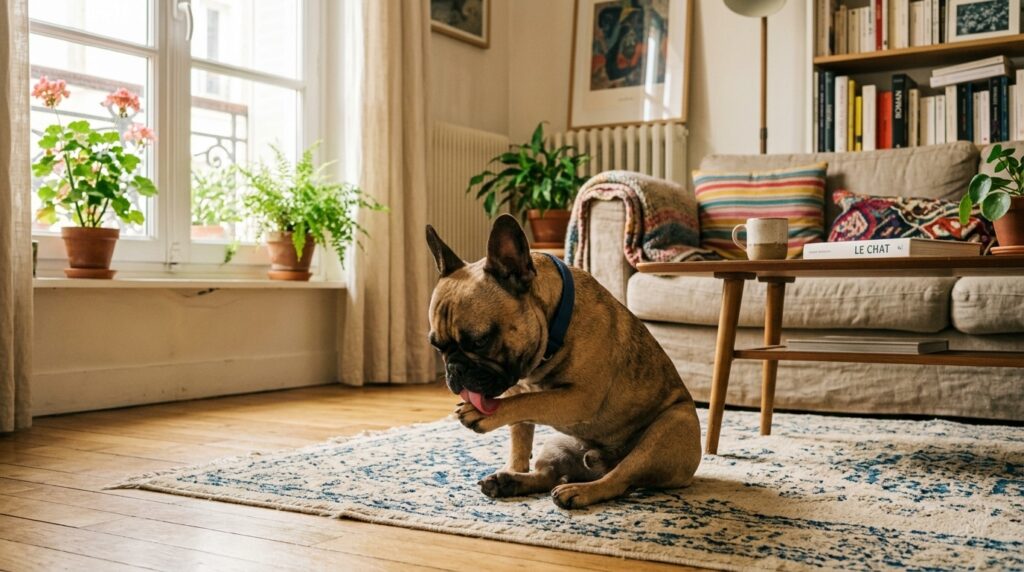
A small paw that goes back and forth under a persistent nose, a rhythmic licking sound that can even test the patience of the most tolerant owner: this is the typical scene of the back-to-school season. One might think the dog has adjusted to a new routine with the return to work, feeling a bit stressed or bored. However, attributing this almost automatic behavior to psychological factors often delays the real discovery. Meanwhile, the itching only worsens.
The real culprit isn’t in their head, but between their paw pads
It’s tempting to accept the simplest explanation: back to school, changes in schedule, fewer walks, and the dog is simply anxious. While this hypothesis may be comforting, it overlooks a critical detail. At the end of summer, gardens, woods, and meadows are still teeming with particularly active parasites. It is precisely between the paw pads, this warm, humid, and hard-to-inspect area, that some of them find refuge. The repetitive licking behavior is thus not a mental symptom but a reaction to a real irritation.
Why these tiny larvae turn paws into zones of unbearable itching
The culprit has a name not widely known: harvest mite larvae. These microscopic mites, nearly invisible to the naked eye, attach themselves to the delicate skin of the paw pads and between the toes to feed. Their saliva, rich in enzymes, triggers an intense inflammatory reaction that results in persistent itching. The dog, unable to comprehend the source of this discomfort, begins to lick and nibble, sometimes even to the point of bleeding. The longer treatment is delayed, the more irritated the area becomes, creating a vicious cycle where damaged skin becomes a gateway for potential secondary infections.
How to act quickly to relieve your companion before it worsens
The good news is that a careful examination of the paws can often confirm the diagnosis in seconds. A slightly orange fur between the pads, red and irritated skin, or tiny clustered dots are all telling signs. Here are some proactive steps to take:
- Regularly inspect the paw pads after each walk, especially in grassy areas
- Gently clean the paws with an appropriate lotion to remove dirt or vegetation residues
- Consult a veterinarian if itching persists or if the skin appears damaged
- Use a seasonally appropriate external anti-parasitic treatment as advised by a professional
A prompt treatment typically relieves the dog within a few days, preventing further infection of the area.
Between the reassuring reflex to blame stress and the sometimes less glamorous reality of a tiny mite nestled between the paw pads, there often lies just a simple step: taking the time to observe. As summer draws to a close, with harvest mite larvae still prevalent in gardens, this simple action can help prevent many complications. So, the next time your dog is frantically licking their paws, what if the first step was simply to take a look before jumping to conclusions?