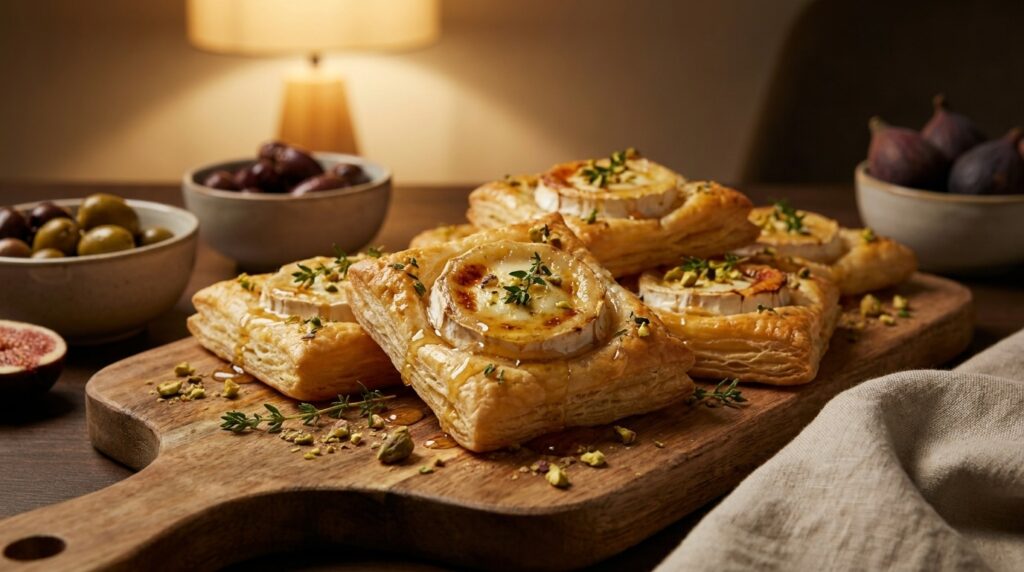
As the evening stretches on and the table fills with clinking glasses, a perfectly crispy bite always makes an impression. Picture a square of flaky pastry that crumbles delightfully, a goat cheese that melts just right, and at its center, a sweet-savory surprise that lingers on the palate. It evokes summer gatherings, plates circulating, and the inevitable “just one more” requests, all while the platter disappears in no time. The secret lies in that golden crust from the oven, the contrasting textures, and the touch of honey that transforms everything. It’s impossible to resist when the pastry emerges hot, glistening, and ready to be nibbled.
Never miss any of our publications:

Tempt your taste buds with these crispy goat cheese and honey squares
Here’s the delightful revelation: this “golden goat cheese delight” manifests as small squares of flaky pastry, filled with goat cheese and honey, baked until crispy and beautifully caramelized at the edges. The interior strikes an addictively balanced note: the sweetness of honey, the tang of cheese, and a hint of thyme that instantly transports you to a sun-drenched summer day. The square shape makes for easy snacking, but it can also be plated elegantly alongside a fresh salad. From the first bite, the contrast between the airy pastry and the melting filling invites you to indulge further.
The ingredients
- 1 sheet of all-butter puff pastry (about 230 g)
- 200 g of goat cheese (log or fresh, depending on preference)
- 3 tablespoons of honey (about 60 g)
- 1 egg
- 1 tablespoon of thick cream (about 15 g)
- 1 teaspoon of thyme (fresh or dried)
- 1 pinch of salt
- Black pepper
- 1 tablespoon of sesame or poppy seeds (optional, about 10 g)
The steps
Preheat the oven to 200 °C (about 400 °F). Roll out the puff pastry on a flat surface and cut it into even squares, approximately 6 to 7 cm on each side, for easy handling. Cut the goat cheese into rounds or place small dollops in the center of each square. Drizzle honey over the cheese, just enough to create a sweet-savory core without soaking the pastry, and sprinkle thyme, pepper, and a tiny pinch of salt on top to enhance the flavors.
In a bowl, whisk the egg with the cream for a softer glaze. Brush the edges of the squares carefully to achieve a shiny golden finish during baking. If you crave a bit of crunch, sprinkle the sesame seeds over the top. Place the squares on a baking sheet lined with parchment paper, spacing them well apart. Bake for about 12 to 15 minutes, until the pastry is puffed and well-colored. Once out of the oven, a minute of resting time is all it takes: the center remains gooey while the bottom stays crisp.
Variations, pairings, and details that make a difference
For truly irresistible results, keep the pastry very cold before baking, and ensure a high heat to make the pastry rise without drying it out. The choice of honey can change the experience: a floral honey remains mild and versatile, while chestnut honey introduces a slight bitterness that pairs beautifully with goat cheese. For a more indulgent twist, consider adding a thin slice of fresh fig or a tiny spoonful of fig jam at the center, especially during summer when figs are at their peak.
As for pairings, these squares love to be served with a salad of arugula, tomatoes, and cucumber, offering a fresh and peppery contrast to the caramelized richness of the cheese and honey. At cocktail hour, a chilled dry white wine, like Sauvignon Blanc or Entre-Deux-Mers, highlights the herbaceous notes of thyme. For a more shareable platter, some olives, nuts, and ripe apricots create a sunny dish. To switch things up without complicating matters, the goat cheese can be replaced with feta (saltier) or a mild blue cheese (more robust), simply adjusting the amount of honey accordingly.
These squares are best served warm when the pastry remains ultra-crisp and the goat cheese is wonderfully gooey. A final touch that always works: a drizzle of honey just after baking to enhance the addictive center and the glossy allure that draws the eye. And if a question lingers after the last bite, it’s often the same: what variation will you try next, with nuts, figs, or a hint of spice?