Do you enjoy our content?
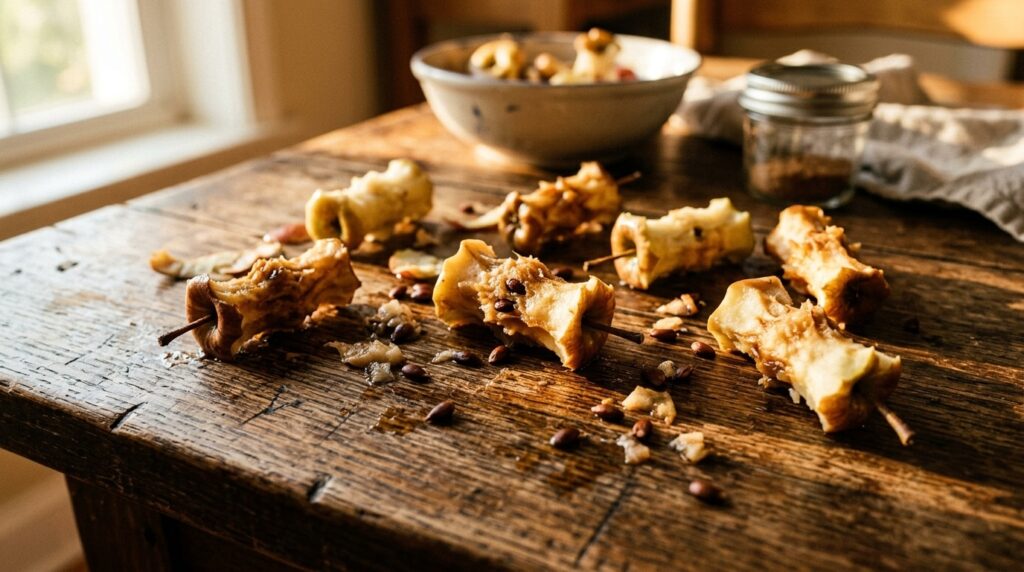
In the rustic kitchens of yesteryear, nothing went to waste, and every peel had its purpose. Apple cores, in particular, received special attention: carefully set aside, they were never destined for the trash or compost pile.
This practice, passed down through generations, was far from trivial. Behind this habit lay a culinary secret, remarkably effective, that industrial cooking has since made us forget. As summer draws to a close and orchards are laden with fruit, it’s time to rediscover this discreet know-how.
Key takeaways
- Apple cores and seeds contain a high concentration of natural pectin.
- This substance allows jams and jellies to set without additives.
- An ancestral trick ideal for the summer and autumn harvest season.
- A zero-waste gesture perfectly suited to modern kitchens.
- A simple, economical method with no processed ingredients.
An ancestral gesture that intrigued in kitchens of the past
In farms and country homes, it was not uncommon to see apple cores carefully collected in a clean cloth or a ceramic bowl. Children would often express their curiosity, and sometimes neighbors would do the same. Yet, seasoned cooks knew exactly what they were doing.
Far from a mere economic reflex, this practice served a very concrete need: to reliably produce jams, jellies, and fruit pastes at the end of summer. In an era without packets of industrial gelling agents available in stores, one had to draw upon the resources of the orchard.
The well-kept secret of cores: a natural substance with unsuspected powers
The core and seeds of the apple naturally concentrate pectin, a plant fiber with remarkable gelling properties. It is this substance that, when combined with sugar and a hint of acidity, allows sweet preparations to achieve a firm and creamy texture.
Some apple varieties are particularly rich in pectin, especially tart ones like reinette, boskoop, or calville. The cores of these fruits, abundant in skin, fibrous core, and seeds, become valuable allies for thickening jams made from fruits low in pectin, such as strawberries, cherries, pears, or figs.
How our grandmothers practically used this trick at summer’s end
The traditional method is disarmingly simple. Cores were gathered as tart, compote, and snack preparations progressed. Once enough were collected, they would be placed in a small muslin bag or a clean cloth pouch.
To flavor and gel a jam, here’s a step-by-step guide inspired by these age-old practices:
- Gather 200 to 300 grams of apple cores and seeds for about 1 kilogram of fruit to preserve.
- Enclose the cores in a muslin bag or a food-safe pouch.
- Immerse this pouch in the jam pot at the beginning of the cooking process.
- Let it simmer with the fruit and sugar until it sets.
- Remove the pouch before jar filling.
Another method involved preparing a concentrated juice: the cores were cooked in a bit of water, strained, and the resulting liquid was used as a gelling base added to the more delicate jams. A remarkably effective know-how, free of additives or commercial powders.
Rehabilitating this zero-waste reflex in our modern kitchens
As we strive to limit food waste and return to more authentic preparations, this ancestral gesture regains its significance. It helps avoid industrial gelling agents, often enriched with citric acid and preservatives, in favor of a completely natural ingredient sourced from the orchard.
This reflex is perfectly aligned with the zero waste movement and suits anyone making their own preserves during this harvest season. Simply freeze the cores as you accumulate them, in a reusable bag, to have them on hand when it’s time to prepare blackberry jelly, mirabelle jam, or fig compote.
One precaution, however: only use cores from untreated apples, ideally from organic cultivation or your own apple tree. Since the skin and seeds can concentrate any residues, it’s best to choose healthy fruit.
Reviving this small gesture passed down by our elders reconnects us with a smart, economical, and respectful cooking philosophy. Apple cores, once relegated to waste, finally reclaim their rightful place in the jam pot. It’s a beautiful way to prepare for the colder months by drawing inspiration from the wisdom of the past.
In summary
- Apple cores are rich in pectin, a 100% natural gelling agent.
- Our ancestors used them to successfully make jams, jellies, and fruit pastes without additives.
- Tart varieties like reinette or boskoop are the most effective.
- The method involves cooking the cores in a muslin bag with the fruit.
- A perfect zero-waste tip for the summer preserving season.
- Best reserved for untreated fruits to maintain preparation quality.