
Do you enjoy our content?
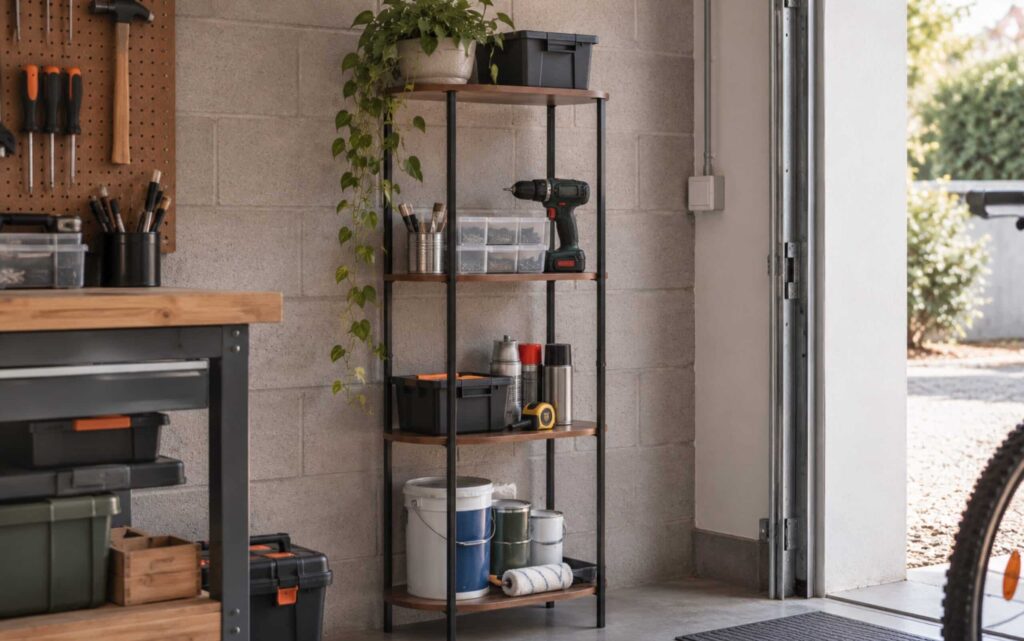
He methodically organizes his open paint cans at the very bottom of his shelf, never at eye level, even though he could easily place them on a higher shelf in seconds. At first glance, it seems like an arbitrary habit, a reflex without much thought behind it. However, upon closer inspection of his shelving unit, it becomes clear that this placement is far from coincidental. In fact, it’s a simple trick tied to the very design of the furniture, and it could significantly alter how you approach your own organization. Let’s delve into the world of home decor to uncover this neighborhood mystery.
- Place the heaviest items, like paint cans, on the lower shelf to stabilize the unit and prevent tipping.
- Each level of this Action shelf can hold a maximum of 5 kg, totaling 20 kg across the entire structure.
- Available for 19.95 euros during Action Week until October 6, this four-tier shelf features a metal frame, FSC® certified MDF wood, and dimensions of 48 x 30 x 150 cm.
- The secret of my neighbor finally revealed
- How the bottom shelf makes all the difference in stability
- This 19.95 euro shelf that hides its true value
- What to remember before organizing your paint cans
The secret of my neighbor finally revealed

After several weeks of observing this peculiar habit without daring to ask, I finally uncovered the rationale behind it. My neighbor does not place his paint cans on the bottom out of laziness or forgetfulness; he does so intentionally and with understanding. His shelf, a four-tier unit available at Action for 19.95 euros, is not designed to accommodate just anything, anywhere. Every level can support a maximum of 5 kg, and since paint cans are often heavy and cumbersome when full, they naturally belong on the nearest level to the floor.
This choice isn’t about aesthetics or convenience in the usual sense. It follows a much more pragmatic logic, rooted in structural common sense. Once you grasp the technical specifications of this furniture, it’s hard to argue against it.
How the bottom shelf makes all the difference in stability
On a shelf standing at 150 cm tall, weight distribution is never trivial. The more you load the upper levels, the higher the center of gravity rises, increasing the risk of tipping, especially with a free-standing structure. This Action shelf, featuring a metal frame and MDF wood shelves, remains stable as long as the heaviest items are placed on the bottom.
This is precisely the reasoning my neighbor applies without even articulating it aloud. By positioning his paint cans, often among the heaviest items in his home, on the lower shelf, he naturally stabilizes the entire unit. The upper levels can then accommodate lighter items, such as books or decorative elements, without jeopardizing the overall balance. A simple logic, but one that deserves reiteration for those who tend to arrange their shelves haphazardly.