Do you enjoy our content?
Sometimes, a slight summer delay can ruin an entire winter harvest. This is the fascinating paradox of certain crops that require precise attention.
Indeed, pulling out thin, pencil-sized stalks in the dead of winter often leaves a bitter taste. This cruel disappointment usually stems from poor timing during the critical transplanting phase.
However, with a few simple and accessible tricks, it becomes quite easy to turn things around. A thriving garden, cultivated in an eco-responsible manner, simply requires a bit of foresight for upcoming seasons.
- The disastrous consequences of late transplanting on vegetable size.
- Winter leeks must be transplanted before the beginning of August.
- Essential steps for an optimized gardening calendar for success.
The harsh reality of a winter harvest sacrificed by late transplanting
- The disastrous consequences of late transplanting on vegetable size.
- Winter leeks must be transplanted before the beginning of August.
- Essential steps for an optimized gardening calendar for success.
Waiting for the hustle and bustle of the back-to-school season to plant in the garden seems to be a stubborn but perilous habit. Even high-quality potting soil lacks the time to act effectively.
As the first frosts arrive, growth suddenly halts. The vegetable stagnates irreversibly and fails to reach the generous size desired for comforting winter soups.
This is a classic mistake many amateur gardeners discover each winter. Many then seek miracle fertilizers at Leroy Merlin, unaware that the issue lies solely in timing.
The urgency of planting before August to ensure deep rooting
The secret to a prolific yield hinges on a strict guideline: winter leeks must be transplanted before the beginning of August to allow time for rooting and growth before the cold sets in.
By transplanting during this crucial summer window, the root system enjoys an optimal environment for settling in. The plant will develop steadily without the need for any chemical products.
To minimize wasted time and effort, certain natural methods ensure a vigorous recovery:
- Trim one-third of the upper leaves to effectively limit water evaporation.
- Lightly shorten the roots before planting to stimulate regrowth.
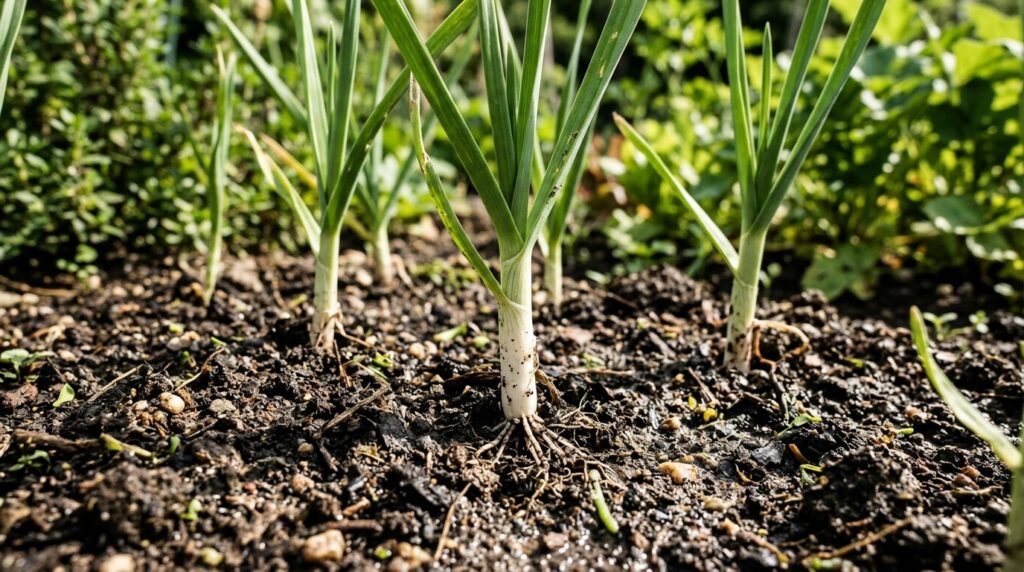
- Plant the seedling deeply in its trench to achieve a nice long white stalk.
- Water generously with about two liters to eliminate air bubbles.
A rethought gardening calendar for next year’s beautiful leeks
To avoid the whims of interrupted growth, it’s essential to organize your urban or rural space with a solid strategy. The key is to always stay one step ahead of nature.
Sowing begins gently in the spring, under a good protective frame, followed by a definitive placement during the heart of summer. A classic, affordable planting soil, easily found at Botanic, will suffice for starting.
Next, adding a thick layer of organic mulch will help preserve the soil’s moisture. This economical technique encourages incredible abundance without heavy treatments to withstand the cold months.
Gently adjusting this little calendar can radically transform the generosity of your plots. By wisely anticipating the drop in temperatures, the promise of healthy, plump, vitamin-rich vegetables becomes a reality in the garden.
In summary:
The success of winter vegetable crops primarily depends on the summer action window. Planting in the ground before autumn’s chill ensures solid rooting, offering beautiful, robust, natural produce to enjoy throughout the cold season.