
Do you enjoy our content?
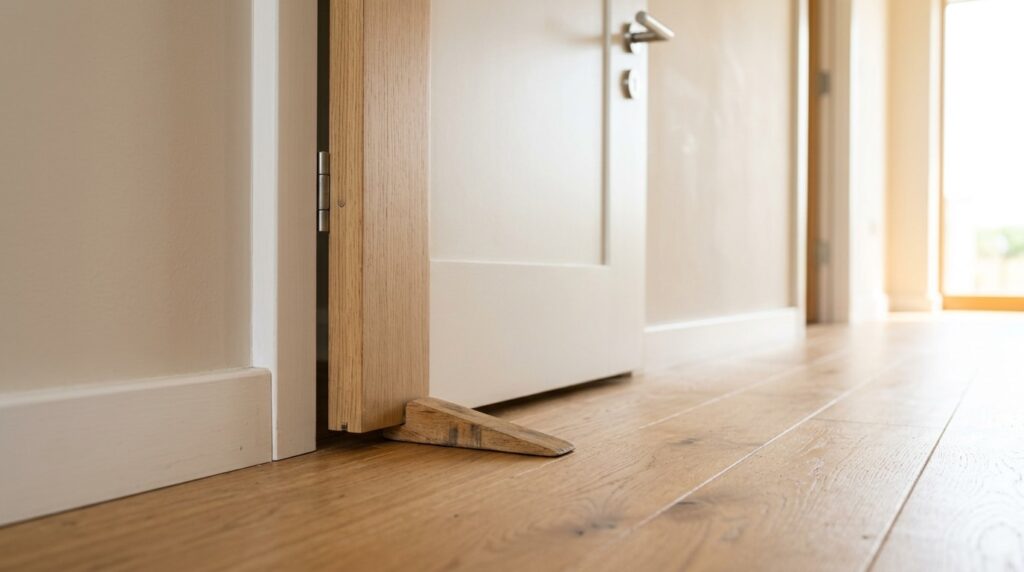
As summer days bring intense heat, many of us instinctively throw open our windows to cool down our homes. This allows for a refreshing breeze, but soon enough, an unwelcome sound interrupts the tranquility: the door slams shut with a force that seems almost violent due to the draft. This common scenario often leads people to grab the nearest heavy object, be it a book, a shoe, or a traditional doorstop, to prop the door in place. However, this widespread habit merely masks a deeper mechanical issue that those familiar with home repairs can recognize at first glance. Blocking the door does nothing but postpone the necessary inspection of the door’s construction. Fortunately, there is a genuine technical solution to prevent these disruptive slams, and it doesn’t involve placing something on the floor.
The doorstop reflex obscuring the real problem with your door mechanism
During the summer, propping a door to ventilate a room might seem like the epitome of a simple solution. Open windows create a formidable draft that can sweep through the house. However, forcing a door to stay open or ajar with a heavy object creates an abnormal mechanical tension throughout the wooden structure. This pressure point, located at the bottom of the door, acts as a harmful lever on the hinges, ultimately misaligning them over time. Moreover, a properly functioning door should not swing wildly at the slightest breeze. If the wind can cause such chaos, it indicates excessive mechanical play in its overall support. Ignoring this clear signal by simply placing an obstacle on the ground is akin to putting a bandage on a sprained ankle: the door frame works unevenly, the joints warp slightly with each impact, and the acoustic insulation between rooms deteriorates. The true issue lies within the pivot and catch elements. These small, often invisible metal pieces require a thorough technical inspection instead of a rudimentary blocking system that gradually damages wall fittings.
Address the root of the problem by tightening the hinges and adjusting the catch
To understand why a door reacts unpredictably to drafts, it’s essential to closely examine the two key components of the mechanism: the metal hinges and the part of the frame that holds the latch. The secret to stable door mechanisms lies in adjusting the latch and tightening the hinges to eliminate play and jarring closures. Over time, due to the weight of solid wood and frequent use, doors may sag by a few precious millimeters. First, equip yourself with a simple screwdriver, either Phillips or flat, to securely re-tighten each hinge attached to the wall frame and the edge of the wood. If the original holes are damaged or too large, a clever trick is to insert small pieces of matchsticks or dowels coated with wood glue into the holes, providing a strong grip for the screw. Next, focus your attention on the latch plate. This essential metal plate, intricately screwed onto the fixed frame, often features a small adjustable tab. Gently bending this tab inward using pliers can drastically reduce the gap when the door is closed, instantly restoring exemplary mechanical firmness to the entire installation.
No more unexpected slams with this winning combination of latch and hinges
Once the hinges are securely fastened to the wall and the latch is meticulously calibrated, the behavior of the door undergoes a radical transformation, even with all windows wide open during the beautiful season. The door regains its perfect alignment, fitting seamlessly within its frame without any unwanted play. The latch now slides smoothly into its metal housing and remains firmly in place without causing any noise, making it entirely unaffected by the shifting air currents from room to room. This is the essence of rational home maintenance. Instead of wasting money on blocking accessories that clutter pathways and weaken the structure, a simple twist of a screwdriver combined with a slight bend of the latch metal is all it takes to correct the initial imbalance. By skillfully combining the necessary stability of the wall frame with tightened hinges and the absolute firmness of a well-adjusted latch, the troublesome issue of slamming doors is permanently eliminated. No draft can ever again turn your passageways into noisy storm zones.
By rethinking these habits associated with ventilating our homes, it becomes clear that small rubber accessories can sometimes cause more problems than they solve for the physical structure of frames. Regular maintenance of pivoting and locking mechanisms guarantees silence while extending the lifespan of materials. So, when will you take a few moments to gather your tools and inspect your door frames to enjoy a summer season of deep and unbroken tranquility?






