Do you enjoy our content?
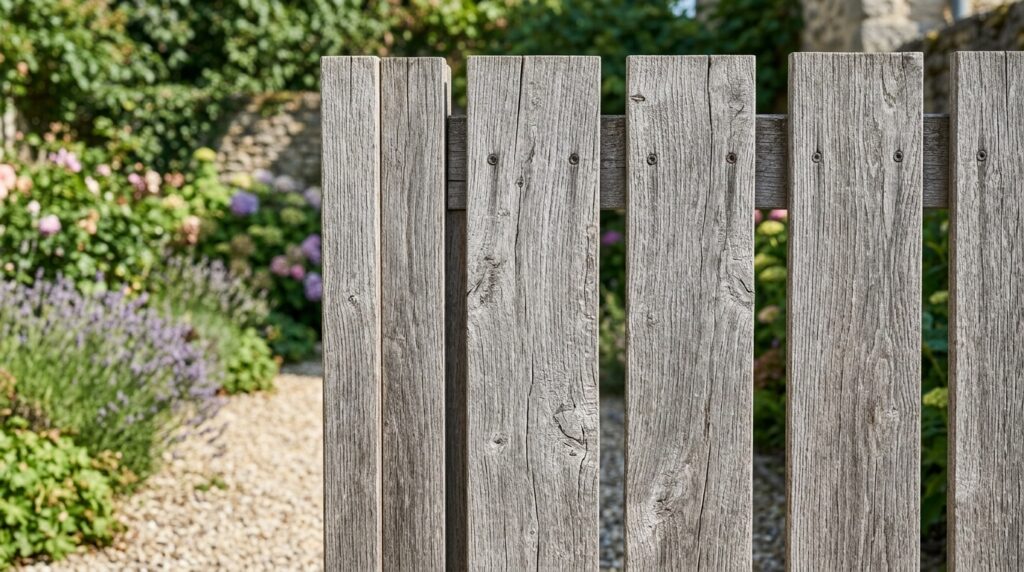
Under the gentle light of late summer, a silvery board stands in stark contrast to its neighboring, dull brown counterpart, despite both having undergone the same treatment on the same day. This scene of two fence slats yielding opposite results can drive many a DIY enthusiast to frustration, while it brings a knowing smile to the faces of seasoned carpenters. The truth they tirelessly proclaim, yet often go unheard, is simple: no expensive saturating product can fix wood that has not been properly prepared. As autumn approaches and thoughts turn to protecting outdoor structures before the rains arrive, it’s essential to understand the real reasons behind wood that grays.
The graying is merely a symptom, not the disease
The wood that has grayed is not dying; it is simply aging due to the effects of UV rays and moisture. This chemical reaction attacks lignin, the natural component that gives wood its original color. The result is a silver-gray hue that many homeowners despise, while others seek it out intentionally. The issue arises when homeowners rush to buy a saturating product, hoping it will magically erase the graying. However, a protective product merely complements the wood; it does not correct any underlying issues unless the surface has been properly prepped. Applying a saturator to gray wood is akin to painting over rust; the outcome will invariably disappoint, regardless of the product’s quality.
Cleaning and drying: the often-overlooked steps
This is precisely where the problems begin. A majority of mishaps stem from hasty or completely absent cleaning. Before any treatment, the wood must be stripped of moss, lichens, and surface gray residues using a stiff brush or a low-powered pressure washer to avoid damaging the fibers. Some opt for a specialized wood cleaner, a product that can restore the wood’s natural hue in mere minutes. However, cleaning alone is insufficient: drying is equally crucial, and this is often the step that gets rushed due to impatience. Wood that remains damp internally will trap moisture beneath the saturating layer, leading to blisters, stains, or premature peeling. Typically, it takes about 48 to 72 hours of thorough drying in dry conditions, and even longer if the ambient humidity remains high. Just because the surface appears dry does not mean the wood is free of moisture at its core; this is why it’s important to choose a rain-free period before proceeding.
The saturating technique: the game changer
Once the wood is clean and completely dry, the long-awaited moment arrives: the application of the saturator. Unlike a stain that forms a film on the surface, a saturator penetrates deeply into the wood fibers, nourishing the material from within while protecting it from UV rays and moisture. The application technique is as important as the product itself. It should always be applied in the direction of the wood grain, using a brush or applicator, in a generous but not excessive layer. A common mistake is to apply too much at once, as the wood will only absorb a limited amount, leaving excess product to form a sticky film on the surface. It is better to apply two thin coats several hours apart than one thick coat. On average, expect to use about 0.15 to 0.20 liters per square meter, depending on the wood’s porosity. The final result, a warm, protective hue that lasts, directly reflects all the invisible prep work done beforehand. The product merely seals in a job well-executed or reveals a hasty effort.
Ultimately, a fence that stands the test of time is never the outcome of chance or a miracle product. It is the result of a careful sequence: understanding why wood grays, meticulously cleaning and drying it, and then patiently and consistently applying the saturator. This logic is well-known among carpenters, yet it is frequently overlooked due to time constraints or a lack of clear information. So, before blaming the next pot of saturator for disappointing results, wouldn’t it be wiser to ask whether the wood preparation was truly up to par?