Do you enjoy our content?
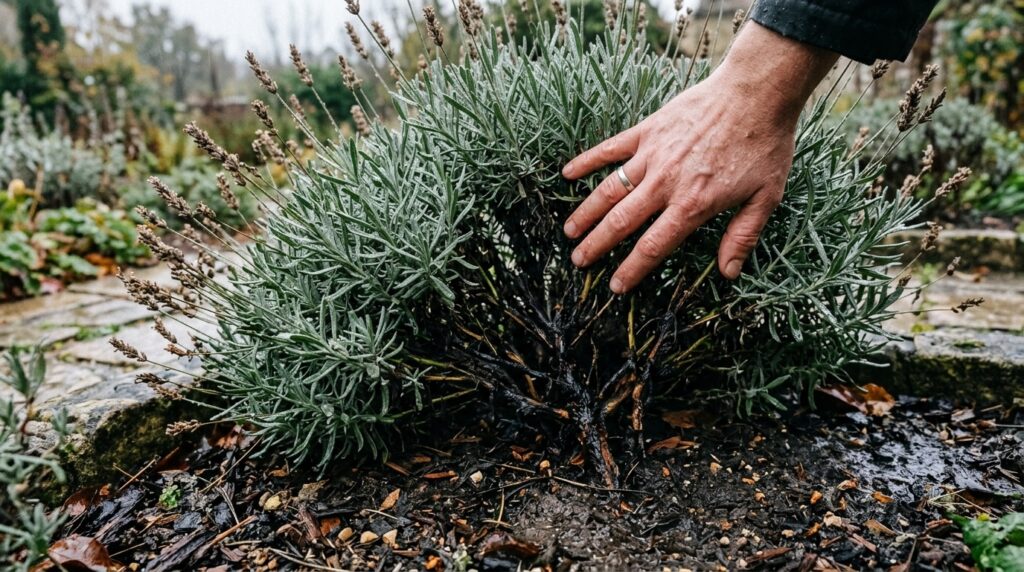
As autumn rains set in, gardens often transform into waterlogged landscapes. Under the persistent gray skies, lavender plants can exhibit alarming signs, with darkening bases and stems that appear to wilt due to excessive moisture. For this Mediterranean plant, accustomed to rocky soils and dry summers, stagnant water poses a far greater threat than the impending cold. Fortunately, a simple gesture, known for generations among seasoned gardeners, can offer these struggling plants a chance before the first frost complicates any intervention.
- Excess moisture in clay soil can rot lavender roots, causing the base of the stems to darken
- To save the plant, clear the saturated earth around the base and incorporate gravel or pumice for drainage
- To prevent issues, choose a south-facing exposure, plant in mounds on heavy soil, and use mineral mulch instead of organic
- Why does lavender darken after autumn rains
- The ancient gesture to save distressed lavender
- Choosing the right location and soil at planting
- Maintenance tips to implement before winter
Why does lavender darken after autumn rains
Lavender (Lavandula) belongs to a family of plants that prefer dryness over constant moisture. Native to the scrublands and poor soils of the Mediterranean, it boasts a root system adapted to areas that drain quickly after rainfall. When water accumulates around the plant’s base for several days, the roots can become oxygen-starved and begin to rot, leading to the characteristic darkening at the base of the stems.
This issue particularly affects lavenders planted in clay or compact soils, which retain water instead of allowing it to seep deep into the ground. Following a series of autumn downpours, these soils become saturated, creating a waterlogged barrier around the roots. Gardeners who have planted their lavender in such substrates without prior drainage amendments often observe this damage once persistent rains commence.
The ancient gesture to save distressed lavender
In response to this predicament, gardeners of yore devised a simple yet remarkably effective technique to rescue lavender threatened by excess moisture. This involves creating drainage around the plant by lightly excavating the soil to incorporate materials that facilitate water evacuation instead of retention. This intervention can still save a plant showing early signs of rot, provided action is taken promptly.
Specifically, it is advisable to clear the saturated soil around the base by a few inches and then mix in gravel or pumice, a porous volcanic rock prized for its drainage properties. This mineral blend, applied both below and above the surface, creates air pockets that prevent water from stagnating against the roots. Excess moisture at the base of lavender in autumn encourages root rot, and implementing drainage with gravel or pumice before the first frost often rectifies the situation in time.
Choosing the right location and soil at planting
It’s better to anticipate such problems than to scramble for solutions once symptoms appear. The choice of location and soil type during planting significantly influences the lavender’s future resilience against water excess. A south-facing exposure, benefiting from all-day sunlight, promotes rapid evaporation of moisture after each rainfall, reducing stagnation risks.
For naturally heavy soils, planting in raised beds is a proven solution. This technique involves slightly elevating the planting area, allowing water to drain towards the lower sections of the garden. Pairing lavender with sandy or even gravelly soils mimics its native habitat and significantly diminishes the risk of rot. Moreover, it harmonizes well with other Mediterranean plants like rosemary (Salvia rosmarinus) or sage (Salvia officinalis), which share similar drainage and sunlight requirements.
Maintenance tips to implement before winter
As winter approaches, a few simple practices can help mitigate risks associated with residual soil moisture. A light pruning of lavender in late autumn promotes air circulation within the clump and reduces areas where moisture might accumulate. This moderate cut, far from weakening the plant, actually aids its survival through the cold season.
The choice of mulch also deserves special attention. Unlike many garden plants that benefit from organic mulch, such as fallen leaves or straw, lavender prefers mineral mulch made of gravel. This type of cover allows water to infiltrate and drain freely without trapping moisture against the collar of the plant, the sensitive area located between the roots and stems. Organic mulch, conversely, tends to maintain constant moisture, which can be particularly detrimental during repeated rainy periods.
These precautions should be adapted based on the climate and region of each garden, as heavy soils in northern France do not share the same needs as lighter, gravelly soils in the south. In regions where winters are notably wet, careful drainage at planting time can prevent many disappointments once the beautiful days of autumn are behind. A simple drainage gesture, performed with gravel or pumice before the first frost, can suffice to save a threatened lavender and grant it another season of fragrant blooms.