
Do you enjoy our content?
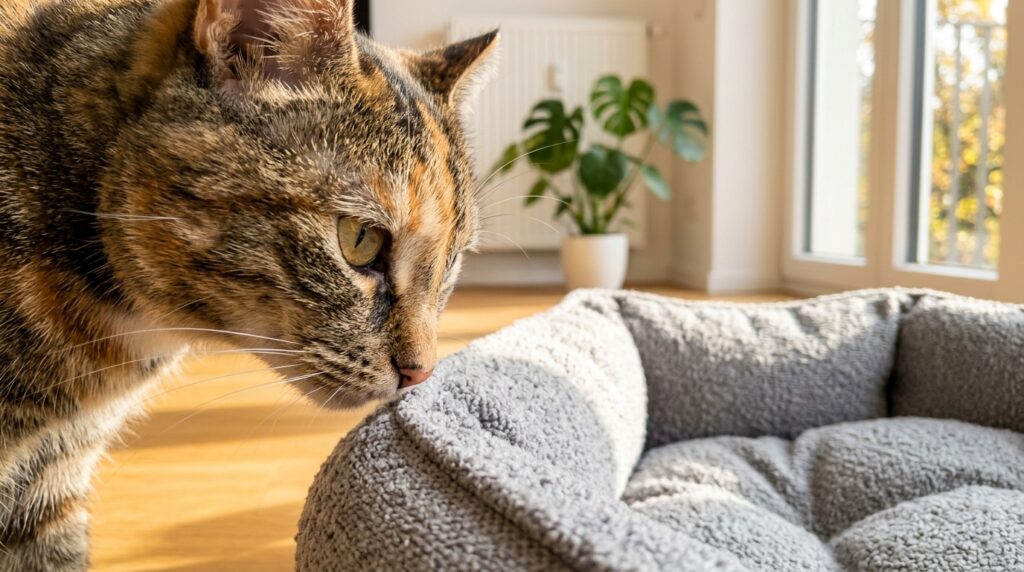
The cardboard box remains in the entryway, while the basket, a plush, brand-new piece carefully chosen for autumn, sits proudly in the middle of the living room. Yet your cat has been circling it for three days, sniffing, approaching, and then retreating. It simply won’t settle in. You picked the coziest, warmest model, one that promised comfortable nights, but nothing seems to work. This silent refusal has a very tangible explanation, and it has nothing to do with the quality of the cushion.
- A new basket smells like plastic and cardboard, foreign scents that make your cat feel insecure.
- The location is just as crucial as the scent: prefer a spot high up, sheltered from drafts, and near a heat source.
- Placing a fabric infused with your scent in the basket significantly speeds up its acceptance by the cat.
- Your cat isn’t being finicky; it’s sending you a clear message
- The placement of the basket makes all the difference
- The textile detail that transforms a basket into a refuge
- What this feline ritual reveals about your bond
Your cat isn’t being finicky; it’s sending you a clear message
A cat that ignores its new basket is not being capricious; it’s communicating. For these animals, scent is paramount, overshadowing comfort or aesthetics. A freshly unpacked basket carries the odors of plastic, cardboard, and sometimes the chemical treatments used during manufacturing. To a cat’s sensitive nose, these smells are perceived as foreign, even alarming. It’s hard to feel secure in a place that bears no familiar trace. This avoidance behavior is actually a clear signal: the object has not yet been validated by its olfactory territory.
The placement of the basket makes all the difference
Beyond scent, the position of the basket also plays a crucial role. Cats instinctively prefer high points or sheltered corners, a trait inherited from their feline ancestors who surveyed their surroundings from elevated positions. Placing a basket on the ground in a busy corridor offers a poor observation post, exposed to drafts and foot traffic. As temperatures drop, another factor comes into play: warmth. A basket situated far from a gentle heat source, like a radiator or a sunlit window in the afternoon, becomes significantly less appealing. Elevating it on a stable piece of furniture or in a calm, warm corner of the house dramatically changes its attractiveness in the eyes of your cat.
The textile detail that transforms a basket into a refuge
There’s a simple trick, long noted by feline behavior experts, that can significantly hasten the adoption of a new sleeping space. Just place a fabric infused with your scent in the basket: an old t-shirt, a worn scarf, or a previously used blanket. This familiar scent acts as an immediate security signal. The cat associates this aroma with a reassuring presence and a territory that has already been validated. It’s often this seemingly minor detail that transforms a basket from a suspicious object to a refuge. You can also gently rub the fabric on your cat’s cheeks, an area rich in scent glands, to further enhance the appropriation of the space.
What this feline ritual reveals about your bond
This little ritual of sniffing is not trivial. It reflects how a cat builds its relationship with its environment and its human. By accepting to sleep in a space that carries your scent, the cat expresses a form of trust. The basket becomes an extension of your relationship, a place where security, warmth, and emotional connection intertwine. Understanding this mechanism can help avoid unnecessary frustrations and allow you to adjust the setup rather than endlessly purchase increasingly sophisticated cushions.
Ultimately, a basket that is snubbed is never merely an issue of poorly calibrated comfort. It’s a matter of scents, positioning, and familiar markers. With a bit of patience and some simple adjustments, this new sleeping space will finally gain favor in the discerning eyes of your cat. The question remains: how long will you have to wait before you see it curled up inside, as if it had always belonged there?






