Do you enjoy our content?
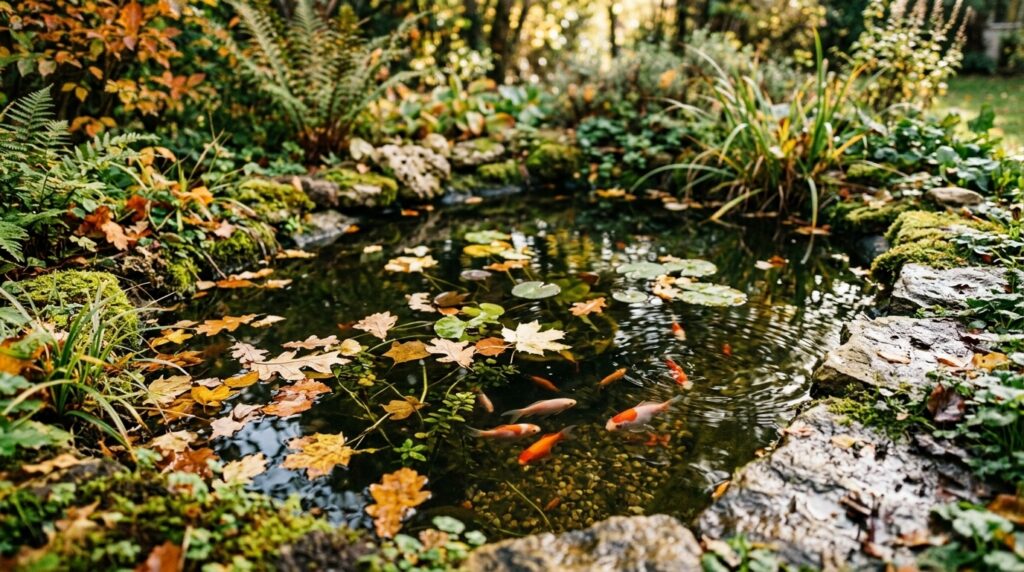
Your fish swim to the surface, gasping for air, and suddenly the crystal-clear water of your landscaping takes on a murky and unpleasant hue. As autumn approaches, trees in your garden begin to shed their colorful adornments, with countless leaves inevitably finding their way into nearby water features. While the sight of these vibrant colors has an undeniable poetic quality, the ecological reality poses a much grimmer scenario for a small urban aquatic ecosystem. The fallen vegetation doesn’t simply lie dormant until spring; it triggers a silent decomposition process with consequences that threaten the balance of your outdoor space throughout the cold season.
- The decomposition of leaves at the bottom of the water suffocates the pond and leads to algae growth in spring.
- Installing a fine-mesh net by mid-September effectively prevents debris from reaching the water.
- Regularly collecting leaves from the water or the protective net allows for direct composting.
- This deadly trap that turns your innocent fallen leaves into toxic sludge
- The foolproof trick of a fine-mesh net to stop the invasion by mid-September
- Your action plan summarized to eliminate debris and ensure crystal-clear water for the return of spring
This deadly trap that turns your innocent fallen leaves into toxic sludge
Once saturated with moisture, leaves become heavy and sink irrevocably to the bottom, embarking on an invisible yet formidable transformation. Cut off from the surface and deprived of oxygen, they cluster together and decompose, creating a thick layer of fermented sludge. This decomposition process consumes massive amounts of oxygen, gradually suffocating beneficial microorganisms and the fish inhabiting the space. Simultaneously, this decaying plant matter releases toxic gases, significantly altering the water’s chemistry. When spring arrives, this accumulated material will serve as the primary fuel for the explosion of algae, resulting in the dreaded green water nightmare that every pond enthusiast fears.
The foolproof trick of a fine-mesh net to stop the invasion by mid-September
The best maintenance strategy always relies on intelligent prevention rather than costly chemical treatments. Deploying a well-stretched fine-mesh net just above the water’s surface is the most economical and environmentally friendly solution available. Easily found in the gardening sections of major retailers, this protective equipment should be installed by mid-September, as the first breezes begin to scatter the leaves. Acting as a physical shield, the net intercepts all debris before it even touches the water, preserving the quality of the aquatic environment and eliminating the daily chore of using a net.
Your action plan summarized to eliminate debris and ensure crystal-clear water for the return of spring
To face the harshest months with confidence and ensure clear water for the upcoming warm season, here’s a systematic and eco-friendly approach to implement starting now:
- Fish out fallen leaves: Use a fine net to carefully remove fresh plant debris before they sink and start decomposing.
- Install the protective net: Securely attach the fine-mesh net to the edges of the pond, ensuring it’s taut enough to prevent sagging from the weight of wet leaves.
- Maintain the net regularly: Shake or gently sweep the net’s surface weekly to prevent overload and material breakage.
- Compost the collected waste: Transfer this free organic material directly to your family compost bin to nourish future blooms or vegetable plants.
By adopting these simple and proactive measures, your garden pond will maintain its vitality and navigate through winter securely, avoiding unpleasant surprises. The mental load of maintenance will be considerably lightened, ensuring a natural awakening free from sludge, algae, and additional costs. Why risk suffocating your aquatic paradise when such accessible preventive measures can make all the difference?