
Do you enjoy our content?
What if that notorious chilly breeze seeping through your window had less to do with the glass itself than with a tiny detail? Every autumn, the same scenario unfolds in woodworking shops: clients convinced they need new windows, while a small strip of material wedged in the frame could do the job instead. This nearly invisible detail is responsible for a significant portion of the drafts felt as September’s coolness settles in.
This small strip that carpenters urgently seek in September
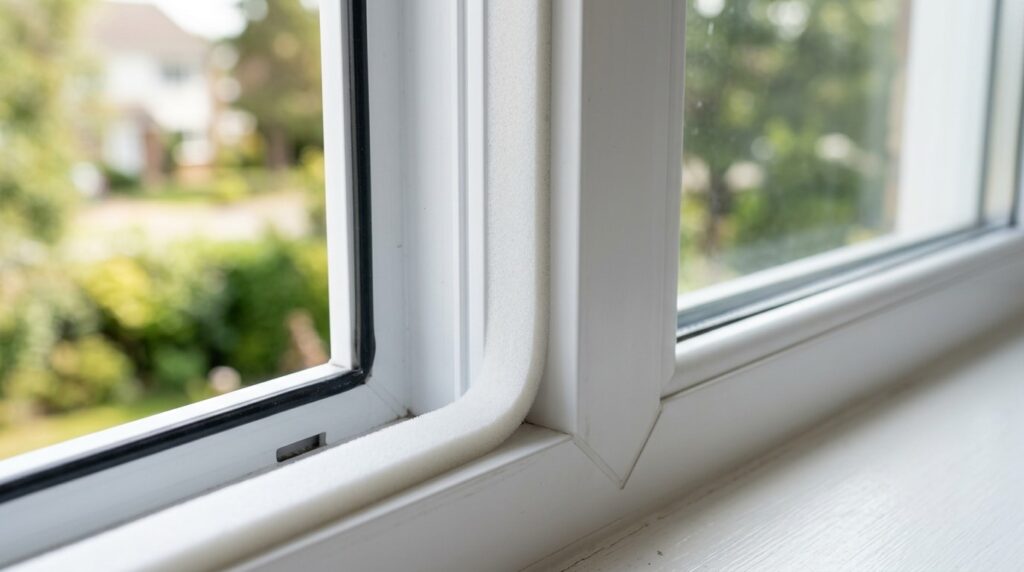
This strip is the weatherstripping that runs all around the window frame. Over time, exposure to sunlight, rain, and temperature fluctuations causes this rubber or silicone seal to harden, crack, and eventually peel away. The result? Tiny gaps form, invisible to the naked eye but easily detectable by the touch of a hand near the frame on a windy day. Carpenters tirelessly remind their clients: before considering an expensive full window replacement, check the condition of this seal. A worn seal can be replaced in less than an hour for just a few dollars, while replacing the glass can cost hundreds per opening. Yet, this simple action remains widely underestimated, overshadowed by the misconception that only new glass can fix the issue.
Why tight seals outperform entire window replacements
The key revelation is this: effective seals reduce air infiltration from old windows often more efficiently than brand new double glazing installed in poorly insulated frames. While new glass may promise excellent thermal performance on paper, if air continues to seep in around the edges, that benefit remains largely theoretical. Craftspeople have observed that an older window fitted with new, properly installed seals can perform better than a double-glazed window whose peripheral sealing has been neglected. The insulating strip acts as a continuous barrier against heat loss, whereas the glass, no matter how efficient, only plays its part in the center of the opening. In other words, money spent on high-end glazing can be partially wasted if the surrounding seal isn’t regularly replaced.
What to remember before the cold sets in
As autumn approaches, a smart move is to inspect every window in your home before the temperatures truly drop. Simply run a damp hand along the frame while the window is closed to identify areas where air is flowing in. Here are the points to prioritize:
- The condition of the seal: cracked, brittle, or peeling means it needs replacement
- The color: a seal that has turned white or lost its original flexibility indicates wear
- The tactile sensation: a chill around the frame signals an air leak
- The sound: a slight whistling on windy days confirms the diagnosis
Replacing a worn seal is a task accessible to anyone with a bit of patience and a utility knife to remove the old strip before installing a new one, typically sold by the meter at home improvement stores. This small gesture, performed annually or every two years depending on the window’s exposure, can prevent invisible yet significant heat loss that impacts your heating bill. Carpenters emphasize this point because it can significantly enhance the comfort of a home without requiring extensive renovations or a hefty budget.
In summary, before considering a complete window replacement as the cold weather arrives, a simple check of the seals might suffice to restore satisfactory insulation. This often-overlooked strip can sometimes weigh more in the thermal balance than poorly insulated new glass. So, the next time you feel a draft near a window, shouldn’t your first instinct be to check that vital seal before reaching for your wallet?