
Do you enjoy our content?
What makes a cocktail, despite its widespread popularity, suddenly feel like it belongs to an entirely different realm? As summer winds down, and gatherings elongate into relaxed dinners with friends, the Espresso Martini possesses that rare talent: it arrives with a bang, and suddenly, the usual classics seem far less exciting. The secret lies not in an elusive bottle but in a meticulously executed, cold, clean, and incredibly effective preparation.
The cocktail that silences the regulars: the espresso martini, origin and immediate “wow” effect
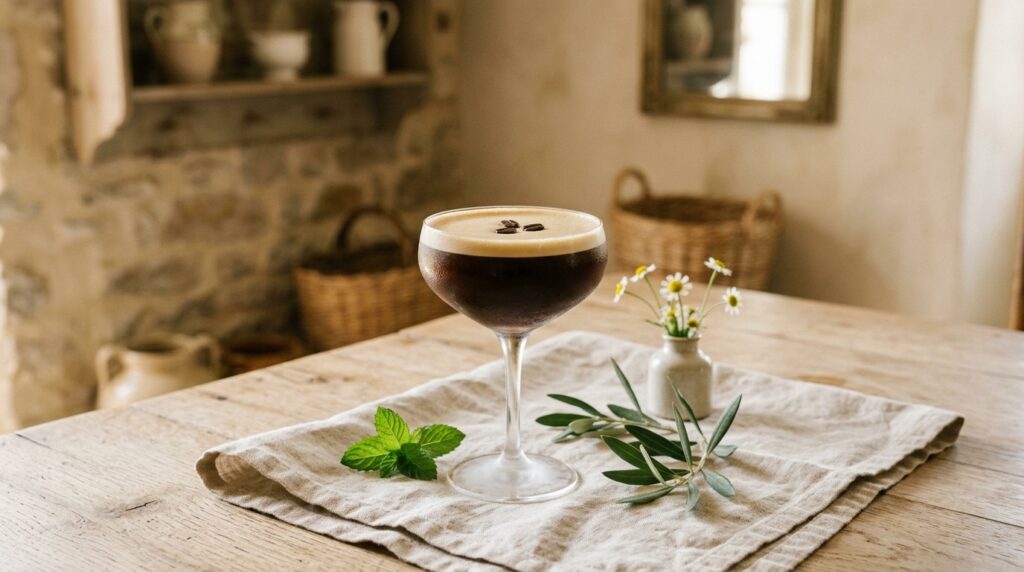
The Espresso Martini is the kind of drink that wins everyone over from the first sip: an intense coffee aroma, a velvety texture, and a fine foam that gives it the appearance of a “bar cocktail” even when made at home. Its charm lies in the balance of three sensations: the aromatic bitterness of coffee, the sweet roundness of liqueur, and the sharpness of vodka. The result is a cocktail that is both elegant and indulgent, perfect for when the atmosphere calls for something more “evening” than “improvised glass.” And when executed well, it inevitably prompts the same reaction: how can this foam be so beautiful, and why does the flavor seem so precise?
The short list that changes everything: ingredients, quantities, and smart choices (coffee, vodka, liqueur, sugar, ice)
The magic of the Espresso Martini also lies in its simplicity: few ingredients, but none can be approximated. Here’s a recipe for 4 cocktails, designed to be easily replicable with supermarket products.
- 160 ml of freshly brewed espresso, then cooled
- 160 ml of vodka
- 80 ml of coffee liqueur
- 20 ml of cane sugar syrup
- A generous amount of ice (preferably solid and well-frozen)
- Optional garnish: a few coffee beans
The smart choices come down to five details. First, the coffee: use an espresso with genuine aromatic intensity, not a long brew. Next, the vodka: as neutral as possible, allowing the coffee to lead the tasting experience. The coffee liqueur adds sweetness but should not overwhelm, thanks to a controlled proportion. The syrup rounds out the flavors, especially if the espresso is particularly strong. Finally, the ice: the more, the better, as it cools quickly without diluting the cocktail.
How to prepare: very cold shaker, cooled espresso, double straining, frosted glass, and liqueur-coffee balance
This is where everything happens, and it’s precisely what transforms a “nice” Espresso Martini into a cocktail that knocks the others out. The protocol is simple but non-negotiable: very cold shaker, cooled espresso, frosted glass, and especially double straining. Before starting, place the glasses in the freezer for a few minutes, or fill them with ice while preparing. In the shaker, pour in the cooled espresso, vodka, coffee liqueur, and syrup, then add a lot of ice. Shake vigorously for about 15 seconds, until the shaker feels icy. Empty the glasses if they contain ice, then pour by double straining (using both the shaker strainer and a fine mesh strainer) to capture any micro-ice shards and achieve a smoother texture. This double straining makes all the difference: the foam becomes finer, the aromas sharper, and the mouthfeel remains velvety without excessive dilution. The final touch: adjust the liqueur-coffee balance for the next serving if needed, as the goal is clear: coffee first, roundness next, and a clean finish.
What to pair with: pairings that enhance coffee (desserts, savory bites, ideal moments)
As summer draws to a close, the Espresso Martini naturally finds its place after dinner or as the evening transitions into something cozier. For sweet pairings, it loves straightforward, rich desserts: dark chocolate squares, tiramisu, chocolate mousse, or even vanilla ice cream if the air is still warm. On the savory side, the surprisingly effective pairings are contrasting bites: roasted almonds, hazelnuts, aged comté cheese, or a thin slice of prosciutto. The coffee highlights the roasted notes, the fat rounds out the alcohol, and the combination feels instantly more “refined” without any effort. This is where the cocktail truly impresses: extreme cold, fine foam, sharp aromas thanks to double straining, controlled texture without over-dilution, and a balance that walks a tightrope between bitterness, sweetness, and strength.
A successful Espresso Martini doesn’t require extravagant accessories, only precise methodology: frosted glass, very cold shaker, cooled espresso, double straining, and a perfectly maintained liqueur-coffee ratio. From there, each serving delivers that immediate “wow” factor that silences comparisons to regular cocktails. The amusing question remains for future gatherings: which other classic also deserves such a simple yet decisive refinement?