
Do you enjoy our content?
As August comes to a close, gardens overflow with tomatoes. Cracked heirloom varieties, overripe beefsteaks, and sun-scorched clusters on the vine: it’s impossible to consume them all in salads or sauces. Each year, the same question arises in family gardens, from the tiniest Parisian balcony to expansive country plots.
However, there exists a subtle, almost forgotten technique that transforms these sun-soaked fruits into a dish worthy of the finest tables. A simple roasting in the oven, a few cloves of garlic, a drizzle of olive oil, and suddenly, the surplus becomes a precious reserve for late summer dinners.
Far from the endless simmering of sauces that demand constant attention, this method relies on the slow concentration of flavors, turning the challenge of excess into a true treasure for the pantry.
Key takeaways
- Overripe August tomatoes offer the highest concentration of sugars and aromas.
- Slow roasting in the oven evaporates moisture and reveals an unmatched confit texture.
- Garlic, thyme, and olive oil create the ideal aromatic trio.
- The confit can be stored for several days in the refrigerator, longer if submerged in oil.
- This preparation serves as a robust substitute for sauces, spreads, or sides.
Why overripe August tomatoes are a culinary goldmine
The tomatoes that seem fit for disposal are, in fact, the prime candidates for transformation. A taut skin, slightly soft flesh, and juice that beads with the slightest touch are all signs of optimal aromatic maturity. On the vine, they have accumulated the sugars and compounds that make all the difference in flavor.
As summer winds down, production often surges all at once. Beefsteak, Black Krim, Marmande, Andean corn: each variety brings its unique nuance. The split or blemished fruits, often overlooked, are perfect for long cooking, as their aesthetic flaws completely disappear during the process.
The oven method that turns surplus into irresistible confit
This technique is founded on a simple principle: gentle, prolonged heat that evaporates water while concentrating flavors. Unlike stovetop cooking, which demands constant vigilance, the oven works its magic autonomously.
- 1.5 kg of ripe tomatoes, halved or quartered depending on size
- 6 to 8 unpeeled garlic cloves
- 4 tablespoons of extra virgin olive oil
- 2 to 3 sprigs of fresh thyme
- 1 teaspoon of sugar
- Salt and freshly ground pepper
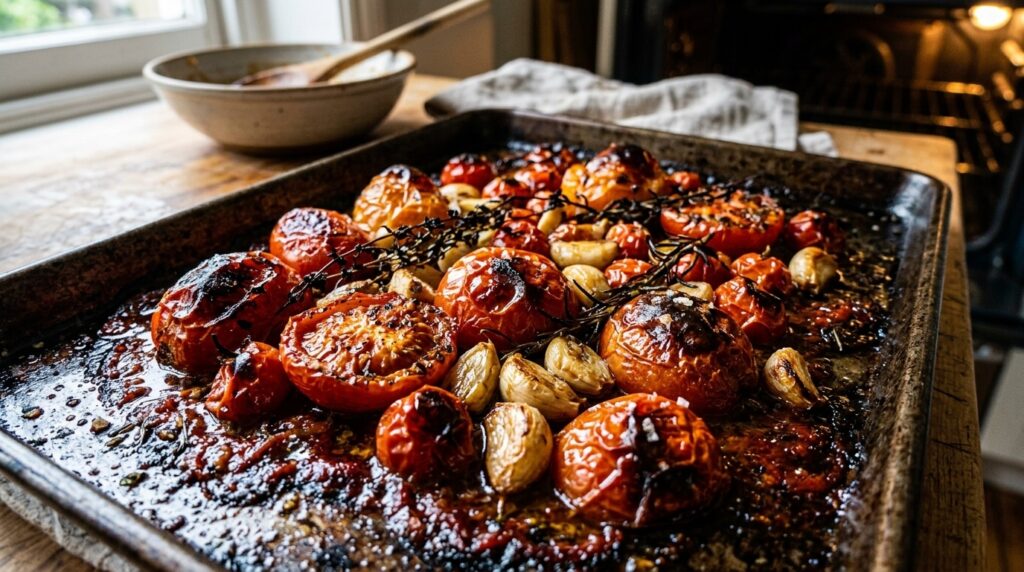
Arrange the tomatoes cut side up in a large dish. Tuck the garlic cloves among the fruits, sprinkle with thyme, add sugar, and season with salt and pepper. Generously drizzle with olive oil. Roast in the oven at 120 °C for 2.5 to 3 hours, until the edges caramelize slightly.
This oven cooking method, combined with garlic, intensifies the juices and transforms the overripe surplus into a professional-quality anti-waste confit, with minimal effort. The result evokes the preparations found at Italian caterers, all at a fraction of the cost.
Garlic, herbs, and oil: the trio that elevates your jars
Each ingredient plays a distinct role. Unpeeled garlic, slowly roasted in its skin, releases a buttery sweetness without harshness. Once cooking is complete, the flesh easily squeezes out of the skin, forming a creamy paste that’s perfect for spreading on the tomatoes.
Olive oil serves both as an aromatic carrier and a preservative. A fruity oil from southern France or Italy will lend more roundness than a neutral oil. Thyme can easily be swapped for rosemary, fresh oregano, or even a few basil leaves added at the end of cooking.
For those looking to explore different flavors, consider adding a splash of balsamic vinegar at the end of cooking, or a handful of capers, black olives, or a twist of lemon zest. The base remains the same, while the variations are endless.
How to use this confit daily and store it safely
Tomato confit can be incorporated into various dishes. Spread it on toasted bread rubbed with garlic for a quick bruschetta. Toss it with warm pasta and a sprinkle of parmesan for a complete meal in minutes. It pairs beautifully with white fish, burrata, a runny omelet, or a cheese platter.
In terms of storage, the confit will last 5 to 7 days in the refrigerator in a clean jar, provided the tomatoes are fully submerged in oil. For longer preservation, freezing in small portions is the safest method at home, avoiding any health risks associated with improper sterilization.
One last tip: do not discard the aromatic oil left at the bottom of the dish. Filter it and pour it into a small bottle; it will enhance a vinaigrette, risotto, or a simple sauté of vegetables.
This preparation perfectly embodies the spirit of the August garden: nothing is wasted, everything is transformed. In just a few hours of passive cooking, the less-than-perfect fruits become the star ingredient of late-season meals, allowing you to approach future bountiful harvests with a renewed sense of calm.
In summary
- Overripe late-summer tomatoes provide the best raw material for homemade confit.
- Slow roasting in the oven at 120 °C for nearly 3 hours naturally concentrates flavors.
- Unpeeled garlic, thyme, and olive oil form the essential aromatic trio.
- The confit can be used on toasted bread, with pasta, fish, or as a side dish.
- It lasts a few days in the fridge, longer when frozen in portions.
- The aromatic oil recovered at the end of cooking becomes a valuable ingredient in its own right.






