
Do you enjoy our content?
In the heart of summer, tomatoes often flood our kitchens, and certain recipes simply cannot tolerate any lingering skin. A sauce that clings, a soup that loses its velvety texture, or a dish with pesky bits rolling around the tongue—just a little misstep can spoil a perfectly ripe tomato. Yet, when it comes time to peel, the flesh can quickly turn to mush if the technique isn’t right. Fortunately, there are several straightforward methods to choose from, depending on what you have on hand, no fancy equipment required. The secret often lies in a simple detail: the cross incision, followed by a choice between boiling water, microwave, direct flame, freezer, or even a serrated knife.
The essential first step: choosing the right tomato, making the cross incision, and timing to avoid mush
Before even considering heat, the focus is on selection and preparation. A too-ripe tomato will tear easily, while a too-firm tomato can be peeled but may require a bit more effort. Ideally, a ripe, fragrant tomato that still holds its shape strikes the perfect balance. In any case, cleanly removing the stem prevents damage to the flesh around the core, making handling easier.
The key action is the cross incision made at the base, opposite the stem. This cut should be superficial—just enough to slice through the skin without cutting into the pulp. This small notch serves as a starting point for peeling and prevents the tomato from bursting, especially in the microwave. Another crucial timing tip: peel as soon as the skin begins to lift, without waiting for the flesh to cook. For an exceptionally smooth texture, particularly in sauces, it can also be beneficial to remove the seeds by halving the tomato and gently scooping them out with a small spoon or pressing gently.
Boiling water, the reliable method: the thermal shock that peels skin in seconds
When a pot is available, the most dependable method remains blanching in boiling water. After making the cross incision, immerse the tomatoes in simmering water for 20 to 30 seconds, just long enough to see the skin lift around the cut. Using a slotted spoon allows for gentle removal, preventing the “squashed tomato” effect that occurs when they are gripped too tightly or left too long.
To maintain a firm flesh, especially if the tomato is intended for a fresh dish, immediately transferring them to a bowl of very cold water, ideally with some ice, makes all the difference. This thermal shock halts the cooking process, enabling the skin to be removed almost effortlessly by gently pulling from the incision. The result is a pristine tomato, free from torn pulp—perfect for a silky sauce, a velvety soup, or more enjoyable preserves.
When there’s no pot available: microwave, direct flame, or serrated knife for quick peeling without damage
When the kitchen is already bustling, three handy alternatives come to the rescue. First, the microwave: it heats quickly due to the water content in the tomato, softening the skin in an instant. Here, the cross incision is non-negotiable, as it allows steam to escape and prevents splattering. A few seconds are sufficient, just be sure to monitor the cooking time to avoid cooking the flesh. Once the skin relaxes, it can be easily removed by pulling from the incision.
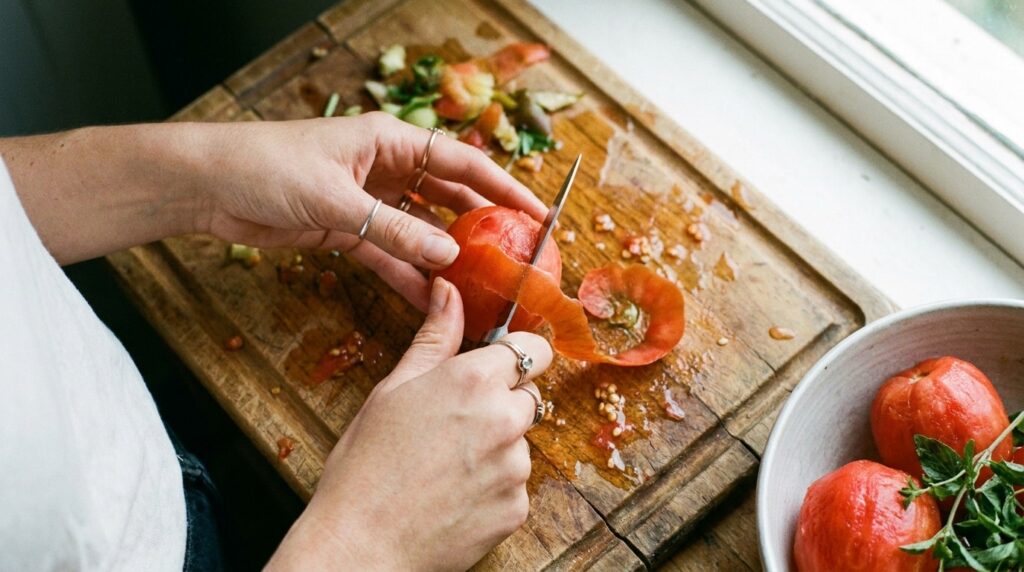
Another useful option, especially when a flame is accessible, is direct flame. Sticking a fork into the stem side allows you to rotate the tomato above a low flame, keeping it a few inches away. The skin cracks and can be peeled off in strips without the flesh turning to mush, provided you don’t linger too long in one spot. Lastly, when no heat source is available, the serrated knife becomes the most reliable ally: its small teeth catch the skin without crushing it. Simply start with a small strip, then follow the contour all around, gently, maintaining a light touch. This option is particularly suitable when you only have one or two tomatoes to peel and want to avoid turning on any heat.
The freezer, the “I plan ahead” trick: easily peeling, managing textures, and selecting the method based on usage
The freezer offers a different advantage: anticipation. A tomato placed in the cold, well-dried, and spaced out on a tray to prevent sticking, peels very easily afterward. Once frozen, a quick rinse under lukewarm water helps the skin detach almost entirely on its own. This technique is practical when a large harvest or a big basket from the market arrives in August, requiring organization without the need for immediate cooking.
However, the texture changes after freezing: the tomato becomes softer upon thawing, making it less suitable for salads. This method shines particularly for cooked applications, such as sauces, soups, stews, or purees. For a quick decision: boiling water remains ideal for a clean, versatile result; the microwave and flame work in a pinch; the serrated knife saves the day without cooking; and the freezer is best when the tomato is destined for a hot preparation. In every case, the cross incision is the small detail that makes all the difference.
Peeling tomatoes should never conclude with squished flesh and a sticky countertop. With the right cross incision and the appropriate method at the right time, the skin detaches surprisingly easily, whether using boiling water, a microwave, a flame, the freezer, or a serrated knife. The only question to ask before starting is simple: should the tomato remain beautiful for a fresh preparation, or can it transform into a melting base for a smooth sauce?






