Do you enjoy our content?
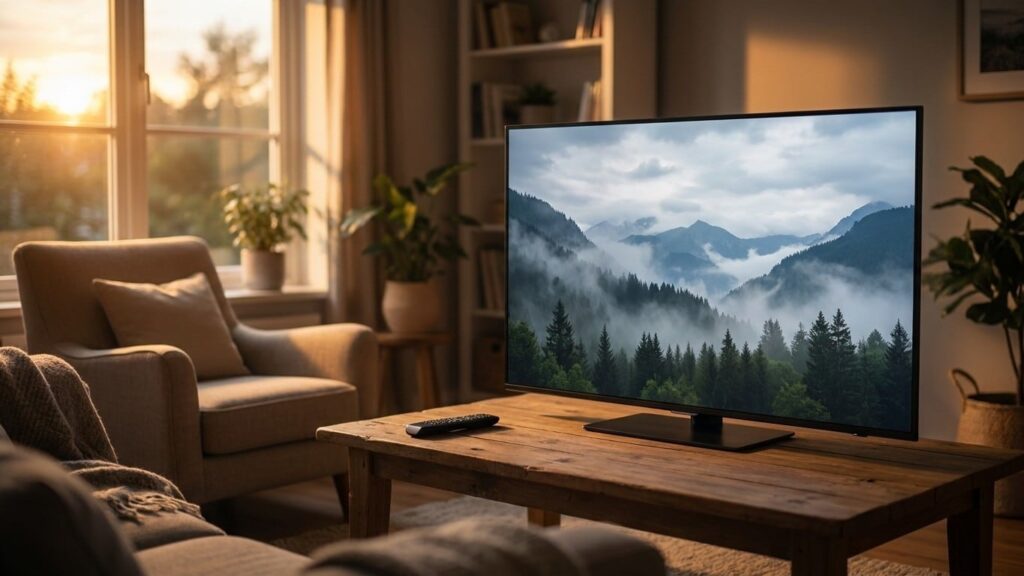
After a long day at work, as night descends, you switch on the television. The image is strikingly bright, almost overwhelming, as if a stadium spotlight has been turned on in your living room.
This isn’t a sign of your screen aging poorly. It’s merely a setting that has remained unchanged since the day you purchased it, a detail that most people overlook.
Key takeaways
- One forgotten setting can double your nightly energy consumption
- Stores deliberately configure televisions to shine under fluorescent lights
- It takes just two minutes to save dozens of dollars each year
The dynamic mode, a remnant from stores
Nearly all new televisions leave the factory with a picture mode labeled “Dynamic” or “Vivid.” The default brightness is calibrated for retail display, not for your living room.
In the bright lights of an electronics store, this brightness helps the screen stand out among countless others. However, at home, in a dimly lit room, this same setting becomes an unnecessary visual assault.
The first adjustment, and often the most impactful, is the screen brightness. Most televisions come with a high setting, designed for showroom conditions. Few think to change it once the television is set up.
Why this setting nearly doubles consumption
The dynamic mode does more than dazzle; it pushes the backlighting to its maximum, which directly impacts your electricity meter.
The HDR mode enhances contrast and brightness but increases consumption by 20 to 30% compared to standard SDR mode. For a current model, that can translate to dozens of additional kWh each year, all for an image that is ultimately less comfortable to view.
With a Mini-LED screen, the light comes from a powerful backlight divided into zones, and even with good local dimming, some zones must remain active to illuminate the picture. In HDR mode, the backlighting can ramp up significantly and frequently. Essentially, the more striking the image is designed to appear, the harder the diodes work.
Evening glare: a telltale symptom
If your screen seems overly bright as soon as night falls, it’s a clear indicator that the setting has never been adjusted for your actual environment. A well-calibrated television adapts to the room, not the other way around.
Many televisions are set by default to high brightness, leading to unnecessary electrical overconsumption. This detail is often overlooked after the initial cable and box setup.
How much it really affects your annual bill
According to ADEME statistics, a primary television consumes an average of 187 kWh annually, assuming daily use of seven hours, resulting in an annual cost of about $36. However, this average hides significant variations based on chosen settings.
The HDR mode increases the maximum brightness of the backlight, leading to a 20 to 30% increase in consumption. On a 55-inch LED screen, this could raise consumption from 80 kWh per year in SDR to about 100 kWh in HDR. Over several years, this difference becomes substantial.
Moreover, the dynamic mode often pushes consumption even further than HDR, consistently maximizing contrast and backlighting. Some reports even suggest that it can double instantaneous consumption for a comparable image once reverted to the standard mode.
The mode to activate tonight
The good news is that correcting this issue takes less than two minutes. Switching to Cinema or Eco mode can reduce consumption by 20 to 40% while providing a more pleasant viewing experience.
Typically, the image menu on your remote is all you need. Look for the “Picture” or “Display Mode” tab, then select “Standard,” “Cinema,” or “Eco” instead of “Dynamic” or “Vivid.”
Some models automatically adjust brightness based on ambient lighting, reducing consumption in the evening or in dark rooms. Activating this function eliminates the need to think about it every night.
Other settings that quietly inflate the bill
The picture mode isn’t the only culprit. Certain effects, like dynamic contrast enhancement or motion smoothing, consume energy without providing real benefits in most cases.