
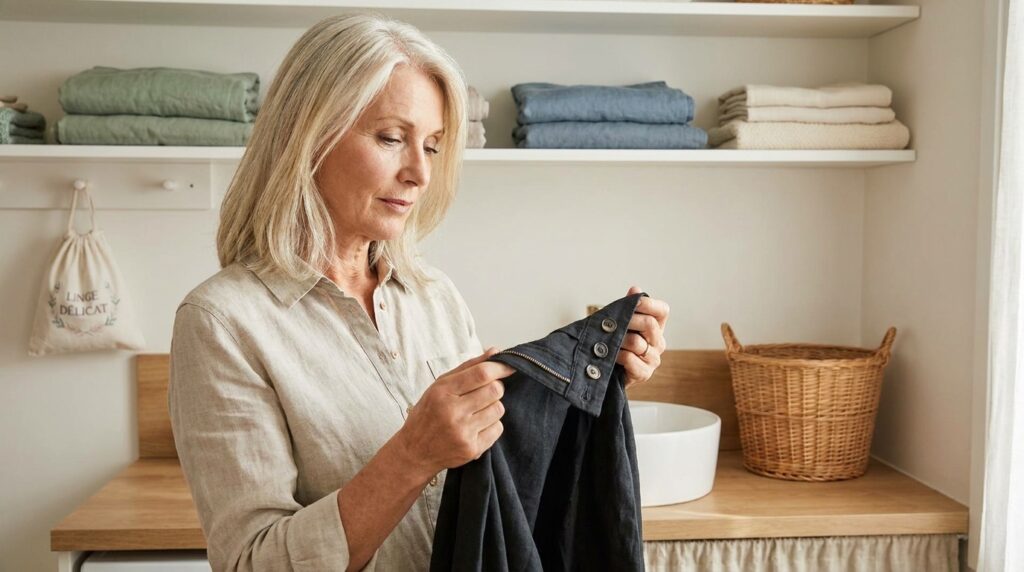
Your laundry may come out looking “clean,” but it could be aging too quickly, with sweaters pilling sooner than expected or shirts snagging for reasons that remain unclear. Often, the culprit lies in a tiny detail: what’s zipped, buttoned, or fastened when you hit “start.” From zippers and lingerie hooks to shirt buttons, the logic isn’t always intuitive. However, taking just a few seconds before washing can prevent micro-damages that become visible over time: pulled fibers, weakened seams, and hidden snags. By adopting the right habits, you can make the drum less aggressive, keep your clothes looking sharper, and enhance maintenance efficiency, all without changing your detergent.
Fastening Zippers and Hooks: A Simple Gesture to Prevent Invisible Snags
Inside the washing machine drum, everything rubs, spins, and collides. The issue is that some components act like tiny hooks. An open zipper exposes the teeth and pull tab, which can snag the threads of a t-shirt, pull a strand from a delicate sweater, or even scratch a fine fabric. The same goes for hooks on bras or bodysuits: they can catch onto other garments, leading to those “invisible” damages that later become glaringly obvious after several washes. The most protective rule is to zip up and secure hooks before starting the machine, ideally turning the items (like jeans or zippered sweatshirts) inside out to minimize direct friction against other garments. This simple act also reduces the risk of damaging zippers from repeated impacts and limits the chances of snagging in synthetic fibers, which can show damage quickly.
Buttons: Why Experts Leave Them Unfastened (and When to Do the Opposite)
Instinctively, many people button their shirts and covers to “maintain shape.” In reality, a buttoned garment experiences increased tension during the spin cycle: the fabric pulls on the buttonholes, seams strain, and some buttons may end up loosening or weakening the surrounding weave. Leaving buttons unfastened allows the fabric to move more freely, reducing localized stress, which helps preserve buttonholes and the button placket. It also prevents the “rope” effect of a closed shirt that twists, wrinkles more severely, and can be more challenging to iron. However, there are exceptions: if a duvet cover tends to “swallow” socks, closing only its fastener (buttons, snaps, or zippers, depending on the design) can prevent items from getting trapped. For very lightweight pieces that tangle easily, a laundry bag is often more reliable than buttoning up. The approach is straightforward: fasten what can snag and leave open what can pull.
Your 30-Second Washing Routine: Sorting, Protective Bags, and Checks Before You Hit “Start”
Before starting a wash, a few quick checks can significantly impact the longevity of your clothes. The goal isn’t to turn laundry into a chore, but to establish a brief, repeatable routine that protects fibers and avoids unpleasant surprises during drying. In practice, “at-risk” items are easy to spot: anything metallic, rigid, or prone to tangling. Just a few seconds are needed to sort and secure, especially if laundry is mixed (jeans, knits, synthetics, lingerie). Laundry bags are especially useful for underwear, tights, sports bras, and small tank tops, as they reduce direct friction and prevent hooks from snagging on other items. To make this gesture automatic, it helps to keep a laundry bag in the hamper: as soon as a delicate item lands inside, it’s already “ready” for the machine.
- Close zippers, snaps, and hooks to prevent them from snagging other fibers
- Leave open most buttons on shirts and blouses to limit stress on buttonholes
- Turn dark garments and those with metallic elements inside out to reduce visible friction
- Place lingerie, tights, and delicate items in a protective bag
- Check pockets and quickly smooth out sleeves or straps to avoid tangles
Fastening what can snag while leaving open what can pull: this dual approach can make a significant difference. By protecting zippers and hooks on one side and avoiding unnecessary tension on buttons on the other, your laundry comes out cleaner, wears less quickly, and is easier to iron. The good news is that these adjustments require no new appliances or miracle products, just a micro-routine before starting the cycle. Perhaps the next step is to view the washing machine as a “mixer” for textiles, where every detail matters: what in the basket might snag or pull today?






