
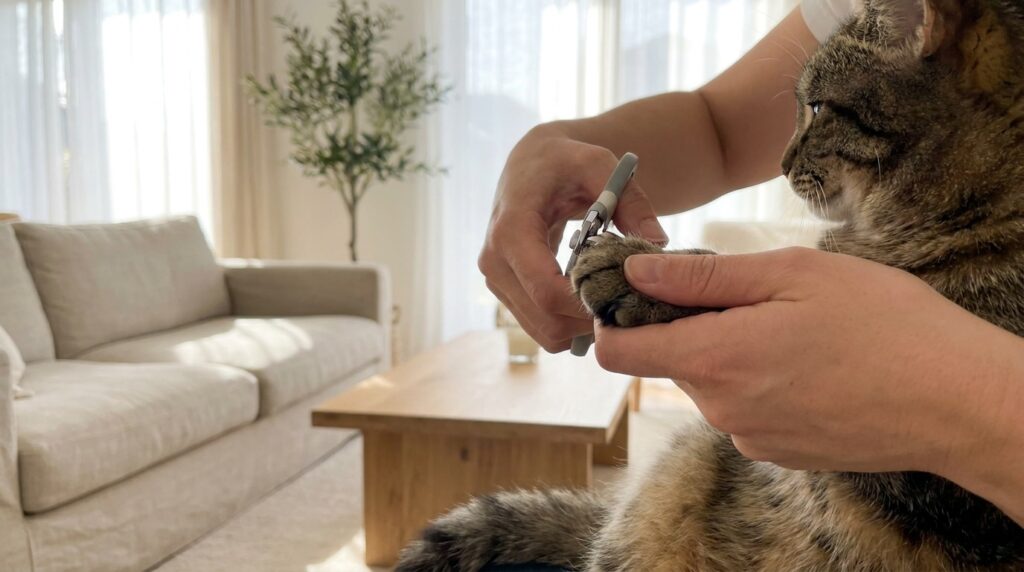
With the sound of suspicious clicks on the hardwood floors and threads tugged on your favorite couch, the urge to reach for the nail clippers can be quite strong. Especially now, as the warmer days return and our indoor predators get excited over every passing fly. However, addressing your furry friend’s claws is not a trivial matter; it often raises the anxiety of potentially inflicting pain. Understanding the physiological needs for natural wear, the actual usefulness of scratching posts, and the anatomical realities of their paws is essential. Let’s sort through the essentials to maintain your feline’s arsenal with confidence and care.
Leave your feline’s claws alone if they’re outdoor explorers, but keep an eye on the indoor dwellers
If your cat spends most of its time roaming the rooftops or exploring the garden, it’s futile to play the pet groomer. An outdoor cat naturally wears down its claws on tree bark or the rough surfaces of walls. This is vital for climbing, hunting unsuspecting rodents, or defending themselves against neighborhood cats. In contrast, the situation is entirely different for indoor cats. Understanding the importance of providing multiple scratching posts within the home is the first step toward promoting self-maintenance, though this alone may not be sufficient.
Observation is key to knowing when intervention is necessary. If you hear a sound reminiscent of tiny heels clicking on the tile, it’s clear that a manicure is in order. Similarly, a cat frequently getting stuck in the curtains requires attention. Pay special attention to older cats: as they age, their mobility declines, and the risk of a claw embedding itself directly into their paw pad significantly increases.
Focus solely on the transparent tip when trimming to avoid any bloody mishaps
There’s no need to panic at the sight of nail clippers, provided you’ve identified the absolute danger zone. You should never touch the pink area at the base of the claw. This small colored triangle is living tissue, rich in nerves and blood vessels. Cutting into it causes sharp pain and can lead to persistent bleeding. The guiding principle is straightforward: trim only the transparent tip of the claws, just 1 to 2 millimeters, when they become too long or snag on surfaces.
With the right technique, this task becomes quite manageable. Gently pressing the tip of the paw will encourage the retractable claw to extend. A quick, clean cut of the tip will suffice. To prevent this from becoming a battle of wills, establish a brief routine every 2 to 4 weeks, using specially designed nail clippers. And to ease the inevitable tension, a small treat at the end of the session often goes a long way in soothing any grievances.
Avoid punishments and declawing; stick to these essential care practices
Yelling at a cat for scratching an off-limits surface is a futile use of energy. It’s a fundamental behavioral need linked to marking territory and stretching. To maintain a well-adjusted pet, the solution lies in strategically placing scratching posts and trimming claws as needed. This combination is usually sufficient to ensure harmony in your home.
It’s also time to dispel some barbaric practices once and for all. Declawing, or onychectomy, is not merely a deep trim; it involves the surgical amputation of the last phalanx of each toe. This is an unbearable mutilation and will be banned in France by 2026, much to the relief of animal advocates. Respecting your companion’s anatomy through simple surface trimming of the translucent tip remains your best approach.
In summary, regular maintenance of your cat’s claws, combined with an acceptance of their natural instincts through a suitable environment, will keep their paws healthy and protect your furniture from inevitable destruction. The gentle, precise, and patient approach always prevails. So, are you ready to establish this protective routine with your whiskered friend?






