Waking up in the middle of the night, drenched in sweat with a clingy pajama top and the feeling of having slept in a greenhouse, often leads us to blame the weather, heating, or stress. However, the mattress plays a pivotal role in regulating heat and humidity. If you’re considering a latex mattress, you’re in luck: it can be an excellent ally, provided you verify the right breathability criteria before making a purchase. As summer approaches and nights become more stifling, it’s the perfect time to sift through genuine solutions versus mere myths.
Understanding why some mattresses make you sweat: the trio of heat, humidity, and ventilation
Nighttime sweating becomes problematic when three elements combine: accumulated heat, trapped humidity, and insufficient ventilation, which prevents everything from dissipating. Certain materials tend to retain heat when in contact with the body, especially if you sleep on your side or if you have a very enveloping mattress. The result? The microclimate between you and your bedding warms up, humidity settles in, and discomfort increases throughout your sleep cycles. An often-overlooked point is that even a “breathable” mattress can feel suffocating if air circulation is poor beneath the bed frame, if the room lacks ventilation, or if the bedding above creates a barrier. Therefore, the goal for better sleep is to aim for a setup that minimizes retention and promotes evacuation, rather than simply seeking a cool touch.
Latex and sweating: the breathability criteria that truly matter before you buy
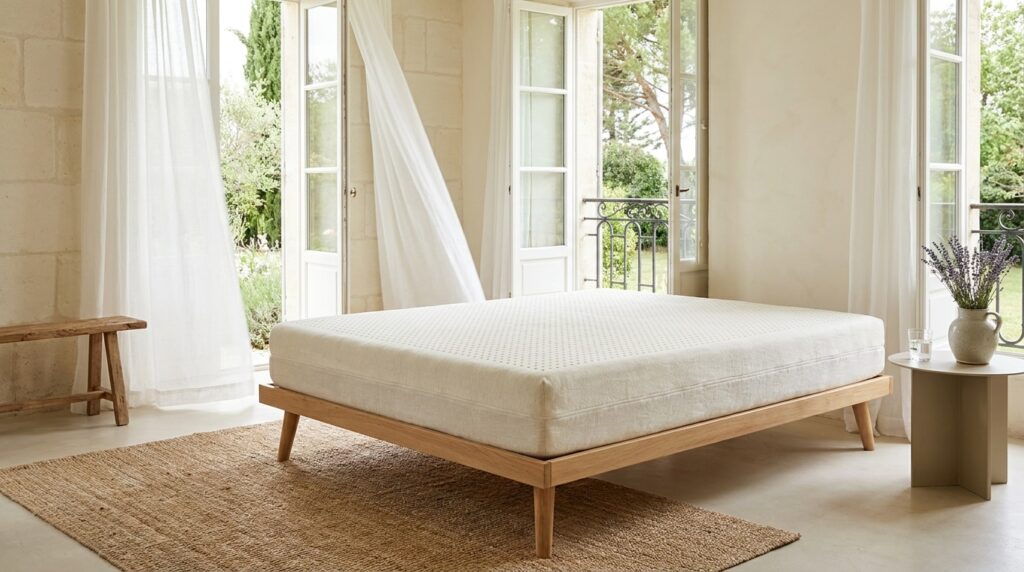
Latex can be highly effective for those who sweat at night, but not all latex mattresses are created equal. The first point to check is the type of latex: natural latex is typically more breathable and better at regulating temperature than certain dense blends. Next, consider the design: a perforated latex (with channels or holes) allows air to circulate better within the mattress, helping to evacuate heat and humidity during the night. Density and thickness also play a role: the more compact a block is, the more heat it can retain, especially if you opt for a very soft and enveloping feel. Finally, pay attention to what surrounds the latex: some added layers for “comfort” can ruin breathability. In practice, if you tend to sweat a lot, it’s best to avoid memory foam toppers, which are often more heat-sensitive and occlusive, even when marketed as “next generation.” For a solid compromise, look for a latex mattress that combines support (to minimize pressure points) and air circulation (to prevent an overly warm cocoon effect), tailored to your body type and sleep position.
Equipping yourself around the mattress: covers, protectors, and accessories to avoid the “sauna” effect at night
Even with an excellent latex mattress, the sensation of heat can stem from the “textile layer”: covers, mattress protectors, sheets, and comforters. To reduce the sauna effect, opt for a breathable cover, ideally made from Tencel or cotton, which manage moisture better and allow for more airflow than denser materials. The mattress protector is critical: many “waterproof” models create a barrier that blocks evaporation. If you sweat, be cautious of plasticized protectors (often noisy and stifling) and instead look for options labeled as breathable, offering a more comfortable daily experience. For accessories, a slatted base often encourages better ventilation than a solid support, and sheets made from natural fibers can make a significant difference during warmer periods. The aim is not to overhaul everything but to align the components: perforated natural latex + Tencel or cotton cover + non-plasticized protector, ensuring that humidity doesn’t get “trapped” underneath you.
To sleep better despite perspiration, remember a straightforward principle: promote air circulation, evacuate humidity, and avoid layers that suffocate. A perforated natural latex mattress, paired with a Tencel or cotton cover, and a non-plasticized mattress protector, significantly reduces the sensation of accumulated heat. All that’s left is to adjust according to your comfort: do you prefer a firmer or softer feel, and does your current bedding truly allow your mattress to breathe through the night?