Let heat do the work
Before diving into the cleaning process, taking advantage of the barbecue’s heat is a clever strategy to make scrubbing easier.
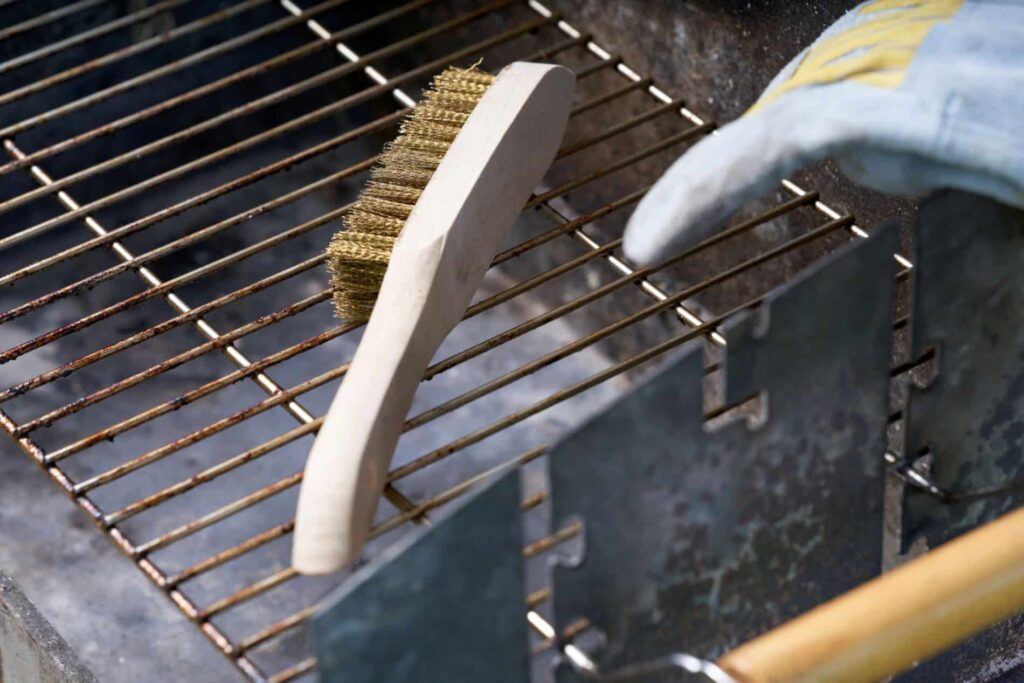
Right after cooking, leave the grill on the warm barbecue and close the lid if possible. The residual heat will carbonize fats and food residues, turning them into ash that can be easily brushed away. After about fifteen minutes, simply use a wire brush or a ball of crumpled aluminum foil to wipe away the remnants effortlessly.
If the barbecue has been off for a while, briefly light a handful of charcoal or activate the burners to recreate this natural pyrolytic effect.
White vinegar for natural degreasing
For a particularly dirty grill, white vinegar is an affordable and natural solution to dissolve grease without excessive scrubbing.
Mix one part white vinegar with one part hot water in a spray bottle, then generously spray the grill. Let it sit for about ten minutes so that the vinegar’s acidity can loosen the residues. Once the time is up, use an abrasive sponge or a wire brush to easily remove the deposits.
In addition to being an effective cleaner, white vinegar also eliminates cooking odors, making it perfect for preventing the flavors of previous grilling sessions from lingering in future meals.

The power of baking soda
For an especially grimy grill, baking soda is a highly effective alternative.
Sprinkle the humid grill generously with baking soda and let it sit for about fifteen minutes. This product acts as a gentle abrasive that helps loosen burnt grease without scratching the metal.
Next, scrub with a sponge soaked in warm water and rinse thoroughly. This method is ideal for regular maintenance and prevents the build-up of stubborn residues over time.
Soaking in soapy water
If the grill is removable, a prolonged soak in hot soapy water significantly eases the cleaning process.
In a basin or directly in the sink, submerge the grill in very hot water combined with black soap or a degreasing dish soap. Allow it to soak for at least 30 minutes, or even overnight for maximum effect. The hot water dissolves grease and softens deposits, allowing for a quick clean with a brush or sponge.
This method is particularly effective for electric or gas barbecues, where cooking residues can adhere more quickly to stainless steel grills.
The lemon trick for a spotless barbecue
To maintain the grill after each use and avoid laborious cleanings, simply cut a lemon in half and let it work its magic.
After cooking, rub the warm grill directly with the lemon’s pulp. Its acidity helps to dissolve fats, while its antibacterial properties prevent bacteria from thriving. Furthermore, it leaves a pleasant and natural scent, posing no health risks.
This method is particularly recommended for cast iron or stainless steel grills, as it doesn’t damage their coating. Additionally, wiping with a dry cloth after application helps prevent rust from forming.